Monday, May 25, 2009

An evening at Le Chat Noir


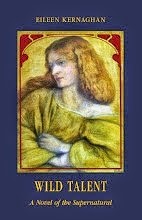
(excerpted from Wild Talent: a Novel of the Supernatural)

“If you have not been to the cabaret Le Chat Noir,” said Alexandra, “you have not seen Paris.” And so we set out this past afternoon for Montmartre, meaning only to stay until the supper hour. But Alexandra’s eagerness for adventure has carried us into a place where I would never have ventured on my own, and where I saw and heard things that have left me sleepless and overwrought.

The afternoon began pleasantly enough as we climbed the steep streets and stairs of Montmartre in late afternoon sunshine. Le Chat Noir is as much art salon and theatre as it is cabaret. The ground floor is decorated in a sort of mediaeval theme, with a stained glass bay window and a lot of imitation tapestries. The walls are entirely covered with paintings and drawings by Montmartre artists who have been refused by the academic galleries, and so display their work in the cabarets instead.


We had arrived, it seemed, at ‘l’heure verte” – which is two hours, really, from 5 to 7 p.m. As we looked for a quiet corner table not too close to the illicit piano, Alexandra explained why this was known as the green hour: it was the time of day when the poets and artists of Montmartre were fond of sipping absinthe. As for Alexandra and me, we were content for the moment to order coffee and madeleines.


... Later there were performances by the poet-chansonniers . One pale, gaunt young man dressed all in black sang a strange lament in the manner, Alexandra says, of M. Baudelaire. Here, en anglais, are some of the words as well as I can remember them, translated with Alexandra’s help:

You come to me at twilight
under the broken walls
of the old city
where the Aubergine's dark waters
sigh like tattered silk.
You come to me from the shadows

under a bruised sky, heavy

with unshed rain.

Your small feet make no sound

on the lichened stones.

I feel on my throat

your insubstantial touch,

your chill sweet breath.

Our days apart

are a fever-dream, a torment,

each meeting

a small exquisite death.


...Then “Mademoiselle David! Mademoiselle Guthrie! How very pleasant to find you here!” I looked up and there, quite as though I had conjured him up, was M. Etienne d’Artois, resplendent in an evening suit of claret coloured velvet. And now he was settling in at our table, clearly inclined to chat.

“What was your impression of that last singer, Mademoiselle Guthrie? An interesting performance, was it not?”

“His voice is pleasant enough,” I agreed. “But did you find the song a little ...” “I hesitated over the right word – “a little morbid, perhaps?”

“Morbid! Précisément! That is exactly what I should have said – a delicious morbidity! The perverse beauty of the fevered imagination!” (“Perverse”, I do believe, is M. d’Artois’s favourite word.)

Summoning our waiter, he asked “Is this your first visit to Montmartre, Mademoiselle?”

I nodded.

“And you are drinking coffee? Non, non, that will simply not do.” And over our faint protests, he ordered absinthe.

Voila, mesdemoiselles,”said M. d’Artois, “Elixir of wormwood – the green fairy!” The waiter had brought us three tall footed glasses, each with a portion of pale green oily liqueur, along with three long slotted spoons, a bowl of sugar cubes and a jug of ice water.

M. d’Artois led us through the ritual, resting the spoon over the glass and placing a sugar cube in its bowl, then pouring cold water over the sugar, until the liquid in the glass turned cloudy.

I did not much like the sound of “elixir of wormwood”, and besides, I have read that absinthe drinking can drive you mad, but I took a cautious sip for politeness’ sake. Tasting of anise and bitter herbs, it was not as unpleasant as I had feared, but there is little danger that I will become addicted to it.


Monday, May 4, 2009

Wild Talent reviewed in The New York Review of Science Fiction


In the April 2009 issue of The New York Review of Science Fiction reviewer Ursula Pflug writes that "acclaimed Canadian author Eileen Kernaghan ... is known both for her painstaking historical research and her interest in diverse cultural and historical manifestations of spirituality. Wild Talent is no exception."

Pflug goes on to note that Alexandra David, one of the two main protagonists in Wild Talent , was a real person, and a brilliant young adventurer. "Kudos to Kernaghan for unearthing a fiercely free-spirited woman whose life was perhaps even stranger than fantasy fiction."

Photo: Alexandra David Néel

Monday, April 20, 2009

On living in the past


I grew up in the era of the technicolour historical epic – the kind in which Tony Curtis famously announced, “Yonda lies da castle of my faddah!” Even at eleven or twelve, I realized that the filmmakers may have been less than scrupulous with historical fact, just as they were less than scrupulous with their hero’s accent. And so as soon as I got home I hauled out the encyclopaedia to find out what really happened in, say, ancient Rome, or 14th century Britain. This is probably why I chose to be a writer of historical fantasy. It’s a genre that, along with a certain degree of imagination and narrative skill, requires close attention to historical fact.

From an online article in Salon magazine: “Children’s fantasy demands the strictest logic, consistency and attention to detail… It is no wonder that the greatest children’s fantasists – Carroll, Lewis, Tolkien – had day jobs in the driest reaches of logic and philology.”

Someone else remarked that when you venture into a fantasy world," it’s not seven-league boots you need, but good stout walking shoes and a Swiss army knife.” (To which I would add, a reliable map of the region.) What makes any fantasy novel work is not how fantastic it is, but how believable. You have to write as though you’ve spent time as an inhabitant of your created world.

A great many children’s and YA fantasy novels are time-slip books, in which the only fantasy element lies in the time-travel itself. The protagonist walks through a hidden gate or into a painting, finds a magic talisman, opens a box in an attic… These time-tourist. stories are entertaining and usually well-researched, and it’s a very appealing way to learn about history. However, events are necessarily interpreted through a modern eye and coloured by a modern sensibility.

As a writer and as a reader, I’m drawn towards the kind of story that totally immerses me in the long ago and far away. My protagonists have no choice but to deal with the dangers, both real and imagined, that lurk in their world. Whatever happens, there’s no chance of escape to the 21st century.

For that kind of book to work, the author has a special challenge. Every sentence must capture the flavour of the period, in dialogue, in narrative voice, in descriptive details -- and yet remain accessible to the young reader who picks up the book in 2009.

I started reading fantasy set in imaginary worlds as far back as I can remember, but as I grew older I realized that the history of the real world is every bit as full of magic, and mystery, and astonishing possibilities.

Amazon.com lists over 32,000 children’s and YA fantasies. I was well into the hundreds in order of popularity before I came across a real-world historical fantasy title, and I found that disappointing. Historical fantasies deserve their place on bestseller lists and bedside tables; and they belong in every school library. A good story is always more engaging than straightforward facts. and a history text, however well written, can’t begin to capture the true flavour of a distant time. Add an element of magic, and you send the reader on an unforgettable journey.

Some Resources:

Living History Through Canadian Time-Slip Fantasy

The Historical Novels Review

Paradox: The Magazine of Historical and Speculative Fiction


Tuesday, April 7, 2009

The Ever-Expanding Bookshelf


With each one of my historical fantasy novels, I add another section to my already crowded reference library. It’s an eclectic assortment, reflecting many historical periods and many systems of belief. There are the books on northern exploration and Finnish mythology from my research for The Snow Queen; British prehistory (The Grey Isles trilogy) and prehistoric Indus Valley archaeology (Winter on the Plain of Ghosts.) There are Elizabethan histories and alchemical texts for The Alchemist’s Daughter, and a full shelf of books on Tibetan Buddhism and Himalayan travel for Dance of the Snow Dragon.

Here’s a sampling of the books I used for my latest novel, Wild Talent: a Novel of the Supernatural. You won’t find all of them in your local library, but for anyone interested in late Victorian England or fin de siècle Paris,-- particularly in the flourishing artistic and occult movements of the period – they’re well worth tracking down.

Charles Dickens, Dickens’s Dictionary of London 1888: an Unconventional Handbook (compiled by the novelist Charles Dickens’s son, and reprinted by Old House Books, Devon, England 1993)
Charles Fort, Wild Talents (Ace Books, 1932; reprinted in Complete Books of Charles Fort, Dover, 1975)
Barbara & Michael Foster, Forbidden Journey – The Life of Alexandra David-Neel (Harper & Row, 1987)
Philippe Jullian, Dreamers of Decadence (Praeger, 1971)
Ian MacDougall, Bondagers: Eight Scots Women Farm Workers (Tuckwell Press, 2000)
Marion Meade, Madame Blavatsky, The Woman Behind the Myth (G.P. Putnam’s Sons, 1980)
Alexander Varias, Paris and the Anarchists: Aesthetes and Subversives During the Fin de Siècle (St. Martin’s Press, 1996)

Saturday, March 7, 2009

Available in the US March 21st

March 21st, 2009 sees the US release of my historical fantasy, Wild Talent: a Novel of the Supernatural.


"The drudgery of rural poverty, the decadence of absinthe-soaked artists, the glamour of the Paris world's fair, and the spiritual debates among London's occult circles are all handled with skill. When I finished Wild Talent I felt that I'd paid a visit to the late 19th century, that I'd been right there with Jeannie all along." Read Kelly Lasiter's review at FantasyLiterature.net


"If you enjoy well-written historical fiction, with particular reference to spiritualism, this is a book for you. Alexandra David and Madame Blavatsky were real people who led fascinating lives." --
Charlotte's Library

Thursday, November 20, 2008

M. Villemain's Painting

Excerpt, Chapter Eight: Wild Talent: a Novel of the Supernatural

On Sunday I went to visit Alexandra. She seemed to me a little pale and subdued. When I asked after her health, she told me, “I am well enough, but I have had a very curious adventure.”

One of the guests presently staying at the house of the Supreme Gnosis is a landscape artist from Paris, called M. Jacques Villemain. Alexandra seems quite smitten, although of course she will not admit to this. She describes him as a tall, pale, rather solemn young man with an unworldly air, “not at all like an artiste Parisien.”

He was a mystic, he informed Alexandra, though not religious, and he invited Alexandra to his room so that she could see some of his work. His landscapes, he said, had a secret reality that ordinary people could not perceive. Of course Alexandra, who is insatiably curious, was intrigued; though she did not think the English would approve of her visiting a young man alone in his room. However, he reassured her, saying that the adepts of the Supreme Gnosis regarded such conventions as absurd and in any case, all Gnostics were pure in spirit.

“Besides,” he said in all seriousness,” I will leave the door ajar ”-- which made Alexandra laugh.

All she saw at first were simple landscapes. “They seemed accomplished enough, with a certain charm, though whether they were anything out of the ordinary I was not qualified to judge. But M. Villemain urged me to look deeper, and gradually I began to see the paintings with different eyes. It was, as he said, as though another, stranger reality hovered just beneath the surface.”

Everywhere Alexandra looked -- at rocks, flowers, bushes, mountains -- she saw an unsettling double image. In one painting a vast deserted heath stretched away to the edge of a lake, with snow-capped peaks rising out of the mist beyond. All across the heath were slender indistinct forms that were at once trees or bushes, and at the same time something else. I saw her shiver a little as she went on, “Somehow they had become men, or animals, and as they looked out at me their faces were full of cunning and a dreadful malice. At that moment I felt quite terrified.”

But needless to say Alexandra’s curiosity overcame her fear, and she reached out to touch the picture. As she did so, M. Villemain suddenly cried out, “Be careful. You could be pulled in.”

“Into what?” she asked in alarm.

“Into the landscape. It is dangerous.”

By now I was quite caught up in this strange story. I leaned forward in excitement. “And what happened then?”

Alexandra shrugged. “That is all that happened. I felt all at once overcome with a terrible fatigue. And so we went downstairs for toast and tea.”

I longed for more. It was as though Alexandra had strayed to the edge of faerie, and returned to tell me only half the tale.

She laughed, as though to dismiss it all as fancy, but there was an edge to her laughter that told me the experience had left her shaken. In truth, I am beginning to fear a little for Alexandra, in case her boldness and her curiosity may take her into places better left unexplored.


(Painting by Albert Pinkham Ryder, courtesy of wikimedia commons)

Wednesday, October 22, 2008

Wild Talent : now available

I'm pleased to announce that my fourth young adult historical fantasy, Wild Talent: a Novel of the Supernatural, is now available at in stores, including Vancouver Kidsbooks, White Dwarf Books, and most Chapters outlets. You can also order it online at amazon.ca , amazon.com and other online bookstore sites.

The year is 1888.

Life takes an abrupt turn for sixteen year old Scottish farmworker Jeannie Guthrie when she defends herself against the advances of her n’er-do-well cousin George. Convinced that George’s wound may prove fatal, Jeannie flees in panic to the anonymity of London. There she is befriended by the free-spirited Alexandra David, and introduced to Madame Helena Blavatsky’s famous salon. Drawn reluctantly into the world of the occult, and seemingly haunted by her cousin’s vengeful ghost, Jeannie must learn to control her dangerous power in order to survive.

The story follows Jeannie and Alexandra from the late Victorian world of spiritualists and theosophists; to the fin de siècle Paris of decadent artists, anarchists and esoteric cults; and finally to the perilous country of the Beyond.

Historical Note: Wild Talent: a novel of the supernatural imagines the meeting, in late Victorian London, of three extraordinary women. In 1888 and 1889 Madame Helena Blavatsky, head of the British Theosophist movement, known to her friends and many admirers as HPB, was living in London’s Holland Park. Fashionable and artistic London flocked to her Saturday afternoon salons.Also residing in London, as a student of oriental languages and religion, was twenty year old Alexandra David. In later life, as Alexandra David Neél, she was to become widely known for her travels in the Himalayas and her many books on Buddhist mysticism. Given Alexandra’s fascination with the occult, we can be fairly certain that she was familiar with Madame Blavatsky’s eccentric household at 17 Lansdowne Road. (Above right) The young Alexandra David

In her London journal of 1888 Alexandra mentions that she has engaged a young girl to help her practise speaking English. In Wild Talent this anonymous jeune fille is given a name -- Jeannie Guthrie – a history, and her own strange story to tell.

READ AN EXCERPT

George moved closer, and I broke out in a cold sweat. There was no way of escape, standing as he did between me and the door. At that moment I spied a pitchfork leaning against a post; and at the same instant he reached for me.

And then all at once there was blood, and George was clutching his shoulder, and cursing in a shrill, outraged voice. The pitchfork, that a moment before had been standing harmlessly against the wall, was now lying at his feet. One of the tines had struck by his shoulder, piercing shirt and flesh.

He clutched his shoulder and stared at the blood welling up between his fingers. "You've killed me," he said, and there was a kind of puzzlement as well as anguish in his look.

"I haven't," I cried. "I didn't." Something had happened, sure enough, and George without question was wounded; yet I felt it had naught to do with me.

"You're a witch," he said, and what I saw in his face now was hatred, and bewilderment, and naked fear.

They fetched George to the steward's cottage, and the steward's wife cleaned his wound and bound it up while they waited for the doctor to come from the village. If his wound should turn bad he may die, and then I will be a murderess, and must be taken away to prison, and will hang. Though perhaps -- and I pray it be so -- the wound is not a fatal one. Still, he named me a witch -- though I swear what I did was through no conscious intent, but a thing I could not control. They burned witches once; and not so very long ago they threw them in the water to see if they would float or drown. I think there are folk hereabout who still hold to such beliefs.

And after all his wound may be deep, and may fester, and he will die. And I will hang for it.

There is naught for it, but to run away.


WILD TALENT – THE LATE VICTORIAN AND THE SUPERNATURAL: a review by Mary E. Choo

Set in Great Britain and France in the late Victorian era, Eileen Kernaghan's current young adult novel is a compelling exploration of the nineteenth century obsession with the supernatural and the occult.

Displaced by family misfortune, sixteen-year-old Jeannie Guthrie is taken in by her uncle, and must earn a hard living as a farm labourer in rural Scotland. When she rejects the advances of her over-attentive cousin, George, injuring him seriously, Jeannie fears she has killed him, and dreading the Draconian punishment of the time, she decides to flee.

Jeannie finds her way to Victorian London, hoping to lose herself in the populous bustle of the city. She is fortunate in befriending the young Frenchwoman, Alexandra David, who introduces her to the salon of the famous Victorian spiritualist, Madame Helena Blavatsky. Jeannie finds employment there, and confirms, to her trepidation, that she has paranormal abilities of her own. Haunted by her experience with George and in constant fear of reprisal, she is forced from her surroundings by circumstance once more. Necessity draws Jeannie and her supernatural gifts into the darker byways of Victorian society, and from there to the heady environs of fin de siècle Paris, where events compel her to confront both her past and her considerable talent.

Kernaghan's eye for period detail and her realization of historic figures seem to get better with every novel, and she weaves a rich cultural tapestry throughout the book. Her portrayal of a young girl trying to make her way in an indifferent society resonates with the attitudes of the era. Jeannie's romantic interest, too, unfolds in keeping with Victorian custom, and her cross-cultural friendship with the sometimes volatile Alexandra plays out in ever-darkening counterpoint. The reader is drawn swiftly into this tale of misadventure and youthful resilience. That we follow Jeannie's exploits by way of her journal entries only adds to the narrative tension.

An absorbing read for any age, and beautifully done.

MORE REVIEWS

Review by Charlotte Taylor, Charlotte's Library

WILD TALENT: A review by Harriet Klausner

CUSTOMER REVIEWS at amazon.ca


Sunday, April 20, 2008

Chiaroscuro


the shadow is always there
dark subtext, dissonance: the mocking laughter
in the fairy wood, the scowling presence
at the birthday feast, the faint suggestion
of warts beneath the velvet coat


this is the page in the book you dare not turn to
the face you see in the mirror
when the light falls at the wrong angle

this is the sly poison under the apple's
smooth red skin, the dark that is not
light's absence, but its twin.


First published in Tesseracts 5, 1996

Tuesday, March 25, 2008

News from the Land of the Thunder Dragon


“When the king of Bhutan told his people to take power for themselves and embrace democracy, few of them wanted to listen at first.” (Vancouver Sun, March 25, 2008)
The small Himalayan kingdom of Bhutan isn’t often in the North American news, but recently it captured worldwide attention when it held its first election – at the direction of the king. Reluctant to make any changes in a country ruled by a philosophy of “gross national happiness”, the Bhutanese turned out enthusiastically to the polls, and voted to keep things pretty much the way they were.
Some years ago I decided to write a fantasy novel set in one of Himalayan kingdoms , and I looked for a country in which northern Buddhist culture has been preserved to the present day. Nepal has been overrun by tourists; Tibet has had its culture systematically destroyed. Sikkim? Ladakh? Then a friend who had just been to a performance of the touring Royal Bhutanese Dance Troupe said “Write about Bhutan.”
By restricting tourism, the kingdom of Bhutan has preserved its ancient culture in an almost pure form. Though inevitably western civilization is encroaching, the magic and mystery of this little-explored kingdom has endured. I found a number of fascinating books by the independent travellers who have been allowed into the country. In those accounts, in Buddhist texts, and in descriptions of life in the monasteries of an earlier Bhutan, I found my story.

Dance of the Snow Dragon, set in 18th century Bhutan, tells of the young monk Sangay, who sets out on a perilous journey to the mystical kingdom of Shambhala, beyond the farthest snow peaks. It was first published by Thistledown Press in 1995, and happily is still in print. It is still, as far as I know, the only fantasy novel set in Bhutan. You can read an excerpt, and some reviews, on my website.


Here is a link to some wonderful photos of Bhutan.

Friday, January 18, 2008

The Sarsen Witch reviewed


Harriet Klausner, MIDWEST BOOK REVIEW:


The Dark Folk, the Ancient people, the Witch People have all been subjugated to the horse-lords. Those not enslaved hide deep in the hills out of fear of captivity. Naeri of the House of the Lady Ashton of the Albur clan hid in the mountains and caves alone foraging for food from the enemy. Eventually she is caught and brought before Chief Ricca to be punished for theft.

She is saved by the smith Gwi, who takes her on as his apprentice though he wants much more form her. The minstrel of the tribe is hers cousin Daui who helps her find a magician who teaches Naeri how to use the stones and earth magic. Once she becomes proficient with its use, Daui directs Ricca and his men to construct a stone circle as a memorial to him at a place where the leylines are numerous and power is stored like a battery. After it is built, Naeri will use her prowess as a geomancer to bring down the horse lords and their tribes. Although frightened Naeri feels obligated to her kin, but believes no good will come of her mission.

THE SARSEN WITCH is a mesmerizing reading experience that depicts life in the Bronze Age of what will eventualy become Britain. Naeri is a survivor who will allows herself to be pushed so far before she goes her own way. It is fascinating to observe how Ricca holds the various horse tribes together using threats and gifts (today we call it an earmark) to keep everyone in line; he is not a bad leader just a product of his time as he is not interested in the welfare of those he conquered (today we call them democrats).

READ AN EXCERPT AT JUNO BOOKS


From the AUTHOR'S NOTE TO THE SARSEN WITCH

As I finished writing this book, archaeologists were moving toward a new prehistory, in which the old notions of invasion and conquest gave way to movements, influences and cultural process. Still, as Christopher Chippindale notes in Stonehenge Complete, “…culture process models may have a weakness when it comes to accounting for single, unique events in prehistory, of which the building of Stonehenge appears to be one. In a novel of prehistory one can only attempt not to violate what is known to be true. This story borrows something from the old prehistory, something from the new; the rest is pure invention.

For those who wish to read more about megaliths and about earth-magic, here are some of my sources:

Atkinson, R. J. C. Stonehenge. Harmondsworth, Middlesex: Penguin, 1979 (rev)
Burl, Aubrey. Prehistoric Avebury. New Haven and London: Yale University Press, 2002 (2nd ed
Chippindale, Christopher. Stonehenge Complete. London, Thames and Hudson, 2004. (New ed.)
Dames, Michael. The Avebury Cycle. London: Thames and Hudson, 1996. (New ed)
Hitching, Francis. Earth Magic. London: Cassell & Co., 1976
Michell, John. The Earth Spirit. London: Thames and Hudson, 1975
Pennick, Nigel. The Ancient Science of Geomancy. London: Thames and Hudson, 1979.
Underwood, Guy. London: Abacus, 1972. The Pattern of the Past. (Reprint)

Monday, December 31, 2007

Books that deserve to be rediscovered: Part Five


Hello Summer, Goodbye, Michael Coney’s haunting novel of bittersweet love, civil war and catastrophic climate change on an alien world, was first published in England in 1975, and reprinted in Canada in 1990 as Pallahaxi Tide. When Mike learned in 2005 that he was suffering from terminal lung cancer, he made Hello Summer, Goodbye and its previously unpublished sequel, I Remember Pallahaxi, available for free download on his website. Now, as a fitting tribute to this immensely talented writer, PS Publishing has brought out both titles as limited edition, slipcased hardcovers.

Mike said of Pallahaxi Tide, “This is a love story, and a science-fiction story, and more besides.” It’s that “more besides” that has continued to captivate readers fortunate enough to discover this beautifully written and wonderfully engaging book.

Sunday, December 23, 2007

The Wrong Granny: a Christmas story


The week before Christmas my very elderly mother-in-law Esther reported that Bad Men from Alberta were attempting to kidnap her from her seniors' home, and that Russian spies had taken over their newsletter. However, she assured us, everything was under control -- an undercover policewoman had been assigned to the case.

"Don't worry, Grandma," we said. "We're coming to pick you up on Christmas morning, and we'll sort it all out then."

On Christmas Eve it snowed, a lot. On the morning of the 25th, all attempts failed to get my rear-wheel drive Chevette up the slope from the house to the street. Taxis were in short supply, but we finally got through to one. They promised to collect Esther and deliver her to our house. We phoned the seniors' home. "Please have Esther waiting at the door with her hat and coat on at 12 o'clock," we said.

The taxi arrived, on schedule. We all rushed out to greet Grandma.

There in the passenger seat, glaring ferociously, sat an irate old lady. We had never seen her before in our lives.

"Oh dear," we told the taxi-driver. "That's not our Grandma.”

"Yes, yes," the taxi driver assured us. "Right house, right lady." He showed us our address, clipped to the dashboard.

"She must be somebody else's granny," said my daughter. "And some other family must have ours."

However, the old lady, clearly believing she had been kidnapped, maintained a tight-lipped silence, refusing to supply name, rank, serial number, or any other information.

"She's probably annoyed," said daughter Sue, "because she thought she was going to a nicer house."

Leaving Sue to calm the increasingly agitated taxi driver, I phoned the seniors' home.

"You've sent us the wrong granny," I said.

There was a long horrified silence. Then the woman at the other end said, "That's not possible."

"I'm afraid it is," I told her. "This may be somebody's granny, but she isn't ours."

"Well, "said the woman, "then it's obvious that the taxi company made a mistake. I'll lodge a complaint."

"Please don't do that," I said, imagining repercussions for the hapless taxi driver. "It's not their fault. You've mixed up the grannies. Could you send us ours, please, and tell us where this lady belongs?"

"I'll have to call you back," the woman said.

Meanwhile, our oldest son and his wife were developing elaborate conspiracy theories involving Russian spies and Bad Men from Alberta.

"Why would anyone want to steal our Grandma?" we wanted to know.

"Maybe they think she's rich," said our daughter. "Should we call the police?"

"No point," said my husband. "Remember, there's already an undercover policewoman on the case."

The seniors' home called back. Our Granny had been located in her room, and was being put in a taxi even as we spoke. Apparently when the first taxi had driven up with Esther nowhere in sight, it had been commandeered by the irate old lady, who was president of the Resident's Association and clearly a force to be reckoned with. A forwarding address was obtained, and we sent the perspiring taxi driver and the Wrong Granny on their way.

In due course another taxi arrived with the Right Granny, hatless, gloveless and equally irate, after being press-ganged from her room by panic-stricken staff, stuffed into a taxi and inexplicably driven off through the snow to some unknown destination.

Surrounded by familiar faces, Esther soon regained her usual good humour. Still, we decided, the whole caper had the unmistakable modus operandi of the Bad Men from Alberta.

Friday, December 7, 2007

The Sarsen Witch reissued


The new edition of my historical fantasy The Sarsen Witch, set in early bronze-age Britain, has just been released by the Juno Books imprint of Wildside Press. You can order it from
amazon.com, amazon.ca, or other online bookstores, or directly from Juno Books. Brick & mortar shops can order from Ingram, or from Juno Books. You can read a review at Alternative Worlds.

I first conceived of The Sarsen Witch as a prehistoric adventure about the intersection of the Neolithic and Bronze Age worlds, and the building of Stonehenge. Later, as the story unfolded, I came to recognize an archetypal pattern. Ricca, the Wessex warrior chieftain, is a flawed and barbaric Arthur; Gwi, the bronze-smith, is his trusted friend; Naeri, my heroine, is the woman they both love; and Daui is the vengeful kinsman who would destroy them all.

In the dramatic cover by Tim Lantz, Naeri appears as she does in the first pages of the book – “chapped lips, windburned face, lean hard-muscled body … a creature spare and strong and hardy as the gorse”.

On a trip to England in 1990 I traveled through Wiltshire, retracing the path of Naeri’s adventures in the megalithic world of Avebury and Stonehenge. You can find some of my experiences on that trip elsewhere in this blog. And if you scroll down you can read an excerpt from The Sarsen Witch.


Monday, October 15, 2007

Books that deserve to be rediscovered: Part Four

In the author’s note to her Arthurian novel Sword at Sunset, Rosemary Sutcliff writes,”behind all the numinous mist of pagan, early Christian and mediaeval splendours that have gathered about it, there stands the solitary figure of one great man. No knight in shining armour, no Round Table, no many-towered Camelot; but a Romano-British war leader to whom, when the Barbarian darkness came flooding in. the last guttering lights of civilization seemed worth fighting for.”

Sutcliff produced more than fifty works of historical fiction set in pre-Roman and Roman Britain, and the Dark Ages. Though almost all of her books were written for young people, the quality of her writing, the authenticity of her research, and the unflinching realism of her storytelling have gained her legions of devoted adult readers.

Sword at Sunset is one of the few books Sutcliff actually wrote for an adult audience. First published in 1963, it was reissued by TOR books in 1987 as an attractive mass market paperback, and is still widely available from used bookstores. It’s a magnificent piece of storytelling; a persuasive work of historical reconstruction; and a memorable portrait of a man who, while mythologized by centuries of hero tales and romances, may well have been a real historical figure.

Tuesday, September 11, 2007

Books that deserve to be rediscovered: Part Three


I would like to think that every generation of fantasy readers will have the good luck to discover Jack Vance’s The Dying Earth. My first encounter was as a preteen in the early fifties , rumnmaging through the bookshelves of a small town secondhand shop. In a jumbled pile of used paperbacks I came across what must have been been the original 1950 Hillman edition. On the cover was a redhaired woman in a diaphanous gown surrounded by thuggish, blackhooded figures. Inside : “Deep in thought, Mazirian the Magician walked his garden. Trees fruited with many intoxications overhung his path, and flowers bowed obsequiously as he passed. An inch above the ground, dull as agates, the eyes of mandrakes followed the tread of his black-slippered feet.”

I was entranced. That copy cost me a dime – the cover price was twenty-five cents -- though I believe that first printing of Vance’s first book is worth about a thousand times that on today’s collectors’ market. In the years since, I’ve made many return visits to Vance’s gorgeously decadent world at the end of time.

That first much-read copy was lost in the course of many moves. I’ve since replaced it with the 1977 Pocket Books edition, though no later edition will ever have, for me, quite the charm of the original.

And a footnote: a major anthology of stories set in the Dying Earth universe, edited by Gardner Dozois and George R.R. Martin, will be published by Tor in the US and HarperCollins Voyager in the UK, as well as in limited editions from Subterranean Press. Fellow west coast author Matthew Hughes , who honours the master in his Henghis Hapthorn novels (Black Brillion, Majestrum, The Gist Hunter) will be one of the contributors.


Tuesday, August 21, 2007

Books that deserve to be rediscovered: Part Two


The Golden Strangers, by Henry Treece (first published 1956)

My 1967 edition of The Golden Strangers, published a year after Henry Treece’s death, was reissued by Hodder and Stoughton in their library of great historical novels chosen by Rosemary Sutcliff. Introducing the novel, Sutcliff writes, “…it remains one of the best as well as one of the strangest historical novels that I have ever met.” The Golden Strangers is set on the English chalk downs in the shadowy world of Stonehenge, as the old Neolithic culture gives way to the early Bronze Age. That Treece’s mid-twentieth century view of prehistory may be somewhat outdated doesn’t alter the essential truth of the story.

Treece was a poet as well as a novelist. His haunting prose is at once lyrical and unflinchingly realistic, as he describes horrific events in a savage world ruled by ritual, superstition and taboo. In M. John Harrison’s words, “Through a stark and unmitigated realism Henry Treece conveys what it must have been like to believe in magic.” And from Rosemary Sutcliff: “(Treece) understood better than any writer I have ever read, the appalling intricacy of life in a primitive society.”

Treece was a prolific writer, producing four volumes of poetry, radio plays and works of criticism, as well as many historical novels set in Britain, Scandinavia and ancient Greece. Among his best work is his Celtic series of novels, which -- along with The Golden Strangers –includes The Dark Island, The Great Captains and Red Queen, White Queen. His last adult novel, The Green Man, set in sixth century northern Europe, is another of my favourites, though definitely not for the squeamish.. You can find a complete list at the Fantastic Fiction site.

Friday, August 17, 2007

Books that deserve to be rediscovered: Part One


Two Under the Indian Sun by Jon & Rumer Godden (first published 1966)

This year, 2007, is the one hundredth anniversary of novelist Rumer Godden’s birth.

At the outbreak of the first world war, seven year old Rumer and her sister Jon left London to join the rest of their family in Narayangunj, East Bengal, (now Bangladesh) where their father worked for a steamship company. This memoir of the years from 1914 to 1919, written in collaboration with her sister Jon, is in their words, “not an autobiography as much as an evocation of a time that is gone.” Seen through the eyes of two bright, adventurous and perceptive children, it’s an extraordinarily detailed picture of life in an expatriate English family in India, in those early years of the twentieth century.

Rumer Godden’s 1946 novel The River (adapted into a movie by Jean Renoir) is very closely based on the same experiences described in Two Under the Indian Sun.

Sunday, July 1, 2007

Forthcoming Fall 2007


The new edition of my Aurora shortlisted bronze age fantasy The Sarsen Witch is scheduled for October 2007 publication by Juno Books.

"In Kernaghan’s hands, as in Joanna Russ and Elizabeth Lynn, women appear alongside men as women complete in themselves, protagonists and heroines in control of their own destinies.” -- Kinesis

"The Sarsen Witch is a dense and gripping novel of the origins of Stonehenge. Full of references to the varied religious rituals of prehistory, including goddess worship and an Atlantis mythos, its complex structure reflects the complexity of the society it represents.” -- The Bookmark

“Kernaghan writes the way people ought to write; her prose has a smooth, poetic flow that draws you irresistibly into her world of horse-tribes and clan-chiefs…The chalk hills and forests, the primitive cultures and tribal wars all complement and lend believability to the tribulations of Naeri as she treads the path to her destiny." -- Michael Coney, in The Reader

Excerpt : Naeri

She had had a name once, and a place in the world – preordained, unquestioned. Naeri, they had called her, the brown lily. A flower name, because she had been a pretty child, smooth-skinned and delicately made. In time, when she grew into full womanhood and wisdom she should have had another, secret name: a name of power.

Remembering those years, she saw circles within circles, like ramparts of banked earth, with herself – warm, loved, secure – inhabiting the center. Tribe, clan, hearth-family – the strong high walls of kinship had sheltered and surrounded her. With time, the faces had grown remote and shadowy, like figures out of Legend. But at night, sometimes, she woke with a hand clutching her heart.

She pushed back the ragged ends of her hair as she knelt beside her supper fire. No flower name would suit me now, she thought with irony. She saw herself in her mind’s eye – chapped lips, windburned face, lean, hard-muscled body. A creature spare and strong and hardy as the gorse. In one terrible hour the horsemen had stripped her of everything – tribe, name, mother, hearthplace – leaving her only her sharp wits and a certain quiescent, unschooled power. And yet they had left her better armed than they knew.

Copyright Eileen Kernaghan 1989 – 2007

Wednesday, June 13, 2007

Wild women, robber-maids and travelling ladies


Uppity women throughout most of history have had bad press. Recently I picked up a book called Criminals, Idiots, Women and Minors: Victorian writing by women on women. Eliza Lynn Linton, in an 1891 essay called “The Wild Women as Social Insurgents", complains about

…that loud and dictatorial person, insurgent and something more, who suffers no one’s opinion to influence her mind. no venerable law hallowed by time, nor custom consecrated by experience, to control her actions. Mistress of herself, the Wild Woman as social insurgent preaches the ‘lesson of liberty;’ broadened into lawlessness and licence. She exemplifies how beauty can degenerate into ugliness, and shows how the fragrant flower, run to seed, is good for neither food nor ornament. Her ideal of life for herself is absolute personal independence coupled with supreme power over men.

Quite so.

Still, it’s the wild women – the Brontë sisters, Mary Wollstoncraft and Mary Shelley, Virginia Woolf and all that uppity sisterhood of writers who continue to fascinate readers; while Eliza Lynn Linton is long forgotten, and rightly so,.

In fairy tale literature, we’re accustomed to reading about princesses and scullery maids, all in dire need of rescuing: we don’t expect to find many wild women. But when Hans Christian Andersen wrote “The Snow Queen: in Seven Stories” in three weeks during 1844, he turned the traditional fairy tale on its head.

In the mid-19th century, children's stories were simply didactic tales meant to teach a moral lesson. Be good, be polite, say your prayers and obey your parents if you want to go to Heaven.

Andersen's stories revolutionized the genre. He gave dark, subversive twists to old folktales, and created original stories straight from his own astonishing imagination. In fact, by 1844, Andersen no longer referred to his fairytales as children's stories -- even though we treat them as such today. They may still end, as “The Snow Queen” does, with a moral sentiment. But the stories themselves are strange and thrilling and extraordinary.

In his autobiography The Fairy Tale of my Life Andersen tells us that the Snow Queen story had its beginning when his father pointed to a shape made by frost on the windowpane. It looked like a woman with outstretched arms; and Andersen’s father said, “She is come to fetch me.” From that rather chilling remark came the story of the boy Kai, kidnapped by the Snow Queen and carried away to her frozen palace in the north.

In place of the conventional male hero who sets forth with sword in hand to rescue the princess , Andersen sends the girl hero Gerda, armed only with her goodness and innocence, on an epic journey to rescue Kai. (And perhaps unintentionally raises the question of whether the Kai is actually worth rescuing. )

Brave and determined though she is, Gerda will never be a wild woman. But the Snow Queen herself (reinvented many times by other writers, from C.S. Lewis to Joan Vinge) is a Wild Woman; and so is the Little Robber Maiden – one of the most intriguing characters in fantasy literature. Where else do we find a child character as fierce and rude and anti-social as the Little Robber Maiden? Or a mother-daughter relationship as disfunctional?

The mid-nineteenth century was a turning point in western culture, when (as in 2007) traditional religious belief ran headlong into modern science. This conflict lies at the heart of Andersen's story. Gerda represents simple, unquestioning faith. Kai (and the Snow Queen's ice-puzzle) represents the new spirit of scientific inquiry which threatens that faith. Kai believes that by solving the Snow Queen’s puzzle – The Game of Reason - he would be his own master, and would possess the whole world – as well as a new pair of skates. (We could argue that what Kai was really trying to do was to split the atom – but that’s a whole other line of inquiry. )

In any case, "The Snow Queen" is a fascinating work of the imagination, with vividly described settings, realistic dialogue, well-developed characters and complex layers of symbolism and metaphor. In fact, it's really more a novel than a fairy tale, with a great deal of psychological depth.

I arrived at my own retelling of The Snow Queen story in a round-about way. Years earlier, I had written a poem called "The Robber Maiden's Story"; later I expanded the poem into an adult short story, that focussed on the relationship between Gerda and the robber-chieftain's daughter. But the Snow Queen wouldn’t let me go. Finally, using the Andersen story as a framework, I started work on a young adult novel. The little robber-girl, always my favourite fairy-tale character, gained a name – Ritva – and a much larger role to play. Ritva’s horrible old mother became a Saami shaman, whose powers Ritva was due to inherit.

I’d been researching Tibetan shamanism for my first YA novel, The Dance of the Snow Dragon , and that led me to books on Finnish and Saami shamanism--and then to the Finnish myth cycle, the Kalevala. I thought I could hear echoes, in Andersen's Christian fantasy, of the older, darker mythology of the Kalevala.

Pohjola, the unknown country of Finnish mythology, lies in the northernmost back corner of the world, where earth and day end. The hero’s journey to Pohjola is one of the central themes of the Finnish epic, just as Gerda’s journey to the Snow Queen’s mysterious kingdom is the central narrative of Andersen’s story

I’m fascinated by connections. And now I was hot on the track of a connection between Andersen and Finnish mythology that I don’t think anyone else had made.

In my mind, the Snow Queen became identified with the Kalevala’s Dark Enchantress, the Woman of Pohjola, the drowner of heroes and destroyer of souls. So partway through the book, my story takes a turn away from Andersen, and moves into the world of Finnish mythology, and also the real historical 19th century world, as I send Gerda and Ritva on foot across the treacherous Arctic ice to the Snow Queen’s palace.

If Andersen could subvert the traditional fairy tale by having the girl rescue the boy, then I decided I could subvert it a little further, by letting Gerda realize that it wasn’t domestic bliss with Kai she really wanted. By now, like a lot of other Victorian women, she’d acquired a taste for travel and adventure. And Kai, who has taken up with a shipful of scientists who are mapping the coastline of Spitzbergen, is clearly not interested in romance.

In the original Snow Queen story Kai and Gerda are young children, and Gerda’s love for Kai is entirely innocent. But the story has been endlessly analyzed, and a lot of critics have noted a certain amount of underlying sexual tension. There’s the robber-maiden's sadistic treatment of Gerda, not to mention the Snow Queen's slightly suspect relationship with Kai.

Because I was writing for young adults, I didn't dwell on that aspect, but made it instead a coming of age story about an unlikely friendship between two oddly-matched young women. And I left the story with the suggestion that Gerda, like other Victorian lady travellers, had many adventures still to come.

Friday, May 25, 2007

Mohenjo-daro: a poem

.
The salt earth is bleached
and brittle as old bone, in winter
on the plain of ghosts.
Shrill and thin down the grey
millennia, the spirit voices
cry on the parched wind.
Language of a dead land--
the wind's riddles:
insistent and insinuating
whisper of pale grasses,
tongueless as corpses the slow
suck and hiss
of the river's mouths
and age-deep in the dust
of empty water-courses
the cryptic dialect
of broken stones.

But on the terraces below the citadel
a flute plays
and ghosts rise in their shining bones
bedecked with jade and lapis lazuli.
Above the luminous pools white birds drift
long-stemmed as water lilies
and terrible in their stripes
behind the broken walls the tigers walk
among the glamorous trees.

(Epigraph to Winter on the Plain of Ghosts: a Novel of Mohenjo-daro)

Wednesday, May 16, 2007

Mohenjo-daro: a puzzle from prehistory


Though writers of historical fiction have a long-standing romance with ancient Egypt and Sumer, surprisingly little has been written about the third great cradle of civilization in the Indus Valley.

The fall of the Indus valley civilization around 1800 BC is one of the great archaeological puzzles. What caused the prehistoric cities of Mohenjo-daro and Harappa to go into decline? Were they destroyed by climate change? A shift in the course of the Indus River? Invasion? Over-grazing?

Mohenjo-daro (“The Mound of the Dead”) was discovered in 1922 by an officer of the Archaeological Survey of India. Excavations carried out during the 1930’s by Sir John Marshall and in 1945 by Mortimer Wheeler yielded a vast amount of information about the city and its inhabitants -- information still studied by present-day archaeologists. However, no one had successfully deciphered the inscriptions on the mysterious Indus valley seals.

Many years ago in an antique store I stumbled across a small self-published monograph by John Newberry of Victoria BC. It turned out to be the first in an ongoing series: Newberry's exhaustive though little-known efforts to decode these inscriptions. I bought the pamphlet. Here was a world lost in antiquity, and an unsolved mystery. I had the subject for a fantasy novel.

Winter on the Plain of Ghosts: a novel of Mohenjo-daro was published in 2004 by Flying Monkey Press, and is available from Amazon.com . You can read more about it in an interview at the Challenging Destiny site.


Note: Since 1947 Mohenjo-daro has been under the protection of the Government of Pakistan, and is now a UNESCO World Heritage Site. Excavations have been banned since the mid-sixties in order to protect the exposed ruins from damage by the elements.

Monday, April 23, 2007

GLASTONBURY: a poem and an excerpt

THE CHALICE WELL

Murmur of voices, and water moving
softly among stones. A cloistered quiet
lies like sweet-scented shadow
on the evening paths. This is the first,
the unremembered garden: aleph, omphalos,
the moment that contains all other moments,
the still centre of the spinning universe.
In last light, the haunted stairs ascend
between the worlds. Where paths meet,
at the confluence of hidden waters,
these mysteries endure:
the inexhaustible spring, the shining roads
across the summer lands; the green
miraculous light beneath the broken tower.


Excerpt from The Alchemist's Daughter (Thistledown Press, 2004)

Towards evening they came to the desolate ruins of the abbey. Standing knee deep in long rank grass, Sidonie gazed at the crumbling ivy-covered walls and shattered piers.. The holiest place in England, she thought. What wickedness can men achieve, and swear it is God's work.

"Had you but seen it in its glory," said a quiet voice. He had crept up soft-shod behind them -- a tall old man in a battered felt hat and shabby cloak. His face, framed by a tangled thicket of white hair, was wind burnt and deeply lined.

"If you could have seen the abbey as it once was-- the sanctuary all a-glitter with gold and brass, the hangings of brocade and embroidered silk. The light through the windows casting all the colours of the rainbow over the high altars, the pillars of the nave lifting their arches up to heaven. All the Lords and knights and ladies, the solemn procession of monks , the organ that played so sweetly you would swear you could hear flutes and cornets in it, and a river of plainsong winding its way to heaven."

His voice rose and fell in a sombre and familiar rhythm. It is a litany he is chanting, Sidonie thought. A requiem for something precious that is lost forever.

"You were a Brother," said Sidonie.

"Aye, that I was. Until King Henry dispossessed us, and sent Thomas Cromwell and his minions to drive us out, and hanged our good Abbot Whiting from the top of the Tor, and fastened his head to the Abbey gate."

He stood gazing up at the gaunt ruin of the Abbey. A small wind had sprung up, with a hint of autumn in it. It toyed with his beard and blew his long white hair into his eyes. Absently he pushed it back. "I remember," he said softly, "how I polished the golden candlesticks and chalices, and the brass on the tombs, and every stroke of the chamois was an offering to the Lord God in heaven. It fair broke my heart to see our treasures carried off, and the walls crumble, and the winter wind blow between the arches."

"And yet..." said Sidonie, looking around the derelict abbey garden. Steeped in the hazy yellow light of evening, there was was a pleasant kind of melancholy about it, and, it seemed to her, a hint of magic. She could almost imagine voices in the pillaged choir loft singing evensong; and the scent of sundried grass was as sweet as incense. "It seems a peaceful place,"she said.

"Aye, that it is," the old man said. "No one comes here now. I'm left to myself, with only the birds in the trees and the hares in the grass for company. We keep our secrets. Now I am an old man, and will take those secrets to the grave. But I dream sometimes of the Abbey rebuilt and its treasures restored. When that day comes, when the true faith returns to England, then I know that peace and plenty will for a long time endure."

He fell silent at last, as though lost in contemplation. Sidonie bade him a courteous goodnight, and received no answer. At last glance, in the fading light, he was gazing up at the broken tower atop the Tor, rapt and far-seeing as some ancient prophet.

Saturday, April 14, 2007

Circles and Standing Stones: part 4


We arrived at Stonehenge at 7 p.m. on a Sunday night, and presented our Special Access letter from English Heritage – a useful document that for a fee allows after hours, inside the rope privileges. “Ah, yes, Mrs. Kernaghan," said the man in charge. "We've been expecting you." Feeling like visiting dignitaries, Kernaghan and party of three headed down the concrete connecting tunnel under the A360.

Stonehenge looms. It broods. It overwhelms. It's managed to survive love-ins, rock festivals, graffiti artists and millions of trampling feet and still retain its ponderous dignity.

As a researcher I knew I should be taking notes; but your instinct, once inside the circle, is simply to gawk. I felt a curious sense of unreality. This was how I had felt when I first saw men walk on the moon. Stonehenge is so familiar an icon, so much a part of everyone's cultural landscape, that it's hard to convince yourself that the stones are real, and not a painted plywood movie set.

I stood on the entrance causeway with my back to the road, watching the sun set between the megaliths in lavish technicolour. I was lost in contemplation of the past. This was Stonehenge as my heroine Naeri must have seen it, on that evening four thousand years ago when the final trilithon was raised....

An indignant voice shouted from behind the roadside fence: "Hey, lady. There's a thousand people out here, all trying to take pictures, and you're standing smack in the way!"

The last colours of the sunset faded, and darkness fell. The crowds of photographers behind the fence put away their equipment and drove off. We decided to wait for moonrise.

Other after-hours visitors have reported noises "as of giant catherine wheels spinning upwards", and flickering lights round the trilithons. Mysterious currents of energy are said to emanate from the stones. Guy Underwood, in The Pattern of the Past, speaks of Stonehenge as a kind of giant condensing battery, a focus of powerful cosmic forces. I'd drawn heavily on his theories when I was writing The Sarsen Witch and was anxious to test them at first hand. I pressed both hands against the lichen-encrusted surface of a trilithon. But on this particular night the generator must have been turned off. All I could feel was the lingering warmth of the September sun.

By nine o'clock it was full dark, and there was no sign of the moon. Black and featureless against the night sky, the stones took on a menacing look. My husband, standing by the Slaughter Stone, theorized on how it got its name. Stop that, Dad," said my daughter, shivering. I felt my own hair stir on the back of my neck. In a place so crowded with ancient ghosts, we were beginning to feel that we’d outstayed our welcome.

When we left there were still people gathered outside the fence. "How is it you got to go inside?" asked one woman. She sounded a little aggrieved.

"Special access," replied my daughter enigmatically.

Saturday, April 7, 2007

Circles and Standing Stones: part 3


Ravaged giants rooted in primordial chalk
sleep now in this mild September light.
Where sheep crop the long grass among the stones
old gods, unvanquished, linger at the edge of sight.

The people formed a circle facing the Mother-Stone; the men dressed in the skins of the red deer, crowned with the Horned God's antlers, the women in white robes, their long unplaited hair bound back with bands of silver. Beyond, the mist writhed and billowed, red-stained by torchlight.

That's Avebury as seen by my heroine, circa l880 B.C., when the temple was long past its glory days but still quite possibly used for rites associated with the Mother Goddess.

When John Aubrey discovered Avebury in 1649, he boasted that the temple "did as much excell Stonehenge as a cathedral does a parish church". Hearing this report, King Charles II rushed off to look for himself. Whatever the king may have thought, Avebury is still regarded as the connoisseur's megalithic ruin. Spread out across a shelf of chaIk on the Marlborough Downs, it's older than Stonehenge, dating from about 2600 B.C. and far grander in scale.

Apart from the village of Avebury iself, and a few discreet signs, very little intrudes on this immense, romantic expanse of grass and stone and sky.

Most megalithic ruins inspire awe, but also a certain amount of gloom. One suspects that under one's feet are the bones of men, women and children who came to sudden and violent ends. But on a sunny September evening, with the yellow autumn light falling across the green pastures, and sheep dozing contentedly with their backs against the warm stones, there is nothing oppressive about Avebury. The stones themselves, alternating between pillars and lozenge-shaped stones balanced on a single foot, are like nothing so much as dancers engaged in some vast and stately round dance.

The only sadness one feels is that so much of Avebury has been destroyed. Of the original one hundred sarsen stones of the outer circle, thirty have survived. Only nine stones remain in the two inner circles. William Stukeley, who was one of Avebury's earliest visitors, watched in helpless despair as local farmers topppled and smashed most of the stones to build the village which still sits inside the great circular earth bank. This "stupendous fabric", he wrote, which had endured for thousands of years, and if left to itself would have lasted as long as the globe, "has fallen a sacrifice to the wretched ignorance and avarice of a little village unluckily plac'd within it."

We followed the trail around the top of the bank, peered down into the ditch, now fifteen feet deep, once twice that depth; and wandered along the Kennet Avenue, with its lines of paired stones, until it ended in a fence and a ploughed field. It was late in the season, and late in the day. We had the place to ourselves.

In this lush green landscape it's tempting to romanticize the past--to think of the builders of Avebury as a peaceful, prosperous folk with lots of time for constructing megalithic monuments and taking part in picturesque rites. Yet the skeletal evidence they've left behind-- fractured arms, shattered skulls, limbs twisted by rickets, spines piercd by arrowheads-- tell quite a different story.