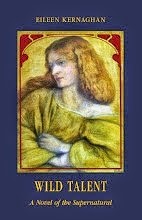
Sunday, March 14, 2010

All the world loves a fair....

 Fired with enthusiasm in the aftermath of the 2010 Olympics, some Vancouver movers and shakers have hinted at the possibility of hosting other and even bigger international events.  Why not World Cup Soccer, or the Summer Olympics? Why not a Vancouver World’s  Fair?

Local organizers would be challenged to come up with a World’s Fair that could match -- for ambition, imagination and sheer extravagance -- the famous Expositions of the 19th century.

The Great Exhibition of the Works of Industry of All Continents (or The Crystal Exhibition), spearheaded by Queen Victoria’s husband Albert, was held in London’s Hyde Park in 1851. Charles Darwin visited, as did Charlotte Brontё , Lewis Carroll, George Eliot, and other luminaries of the time. The exhibition was housed in the Crystal Palace, a vast building of iron and glass hailed as an architectural and engineering marvel. The Koh-i-noor diamond was exhibited, and the first public restrooms, designed by George Jennings, were made available to the public for a penny. Six million people attended the exhibition, and the resulting surplus continues to fund research grants and scholarships to the present day.

There were, of course, naysayers. Some conservative thinkers suggested that this vast horde of visitors might erupt into a revolutionary mob; while Karl Marx and his fellow radicals decried its emphasis on capitalist commodities.

The Chicago World’s Fair of 1893 celebrated the four hundredth anniversary of Christopher Columbus’s arrival in the New World. More than two hundred classically designed white stucco buildings were erected on the six hundred acre site. This brilliantly illuminated “White City” inspired L. Frank Baum’s Emerald City of the Oz books, as well as Walt Disney’s theme parks (although some architecture critics thought the buildings looked like "decorated sheds".

Not everything went well. Many of the buildings still remained unfinished at opening time, and though more than 26 million people attended, the Chicago fair teetered on the edge of bankruptcy. Worse still, a pall was cast over the closing days of the exposition when the popular mayor of Chicago was assassinated.

The Exposition Universelle, held in Paris over the summer and autumn of 1889, marked the hundredth anniversary of the storming of the Bastille. Its centerpiece was the newly completed Eiffel Tower, which served as the grand entrance to the fair (and caused outrage among the artists of Paris. who called it "the junkman's Notre Dame".) Other main attractions were the Galerie des Machines, which used hinged arches to span what was at that time the world’s longest interior space; and the Colonial Exhibition, “which for the first time brings vividly to the appreciation of the Frenchmen that they are masters of lands beyond the sea....”
(Engineering, May 3, 1889) 

In my novel Wild Talent, Jeannie Guthrie and her friend Alexandra David spend a day at  the Exposition Universelle – and their reactions, as recorded in Jeannie’s Paris journal, are mixed.

(From Chapter Thirty-Two, Wild Talent: a Novel of the Supernatural)

July 20

I am not surprised that Madame Blavatsky so dislikes M. Eiffel’s tower. That metal colossus looming over the city is startling to see and impossible to ignore. Alexandra tells me that some of Paris’s most famous writers and artists protested its construction with an angry petition to the city government, but to no avail. However Alexandra, who because of her Oriental studies takes a longer view, says “After all, it is only made of iron. In time it will simply rust away, and fall to bits like Ozymandias.”

In any event, it serves as a grand entrance to the Universal Exposition, and passing beneath is like entering the gates of fairyland. The exposition spread out along the Champ de Mars and well beyond, commemorates the hundredth anniversary of the storming of the Bastille and the beginning of the French Revolution.  (I hoped there would be no guillotines on display – to my relief there are not – though we have heard there was a proposal, wisely rejected, to build one thirty metres high.)
   
There is an endless and bewildering number of exhibits – more than 61,000, according to the official guide – “a gigantic encyclopaedia, in which nothing is forgotten.” In the History of Habitation we saw a prehistoric house (rather like a tall, lumpy  anthill), a Lapland and a Russian house, and homes of the ancient Egyptians and Phoenicians. We visited a Polynesian village, a Chinese pavilion, an Angkor Pagoda, a Portico of Ceramics, a display of antique Persian carpets. We rode on the trottoir roulant, the moving pavement, drank black coffee and ate pastries in a  Moorish café, watched the Argentinean tango dancers, heard music played on gamelins by Javanese musicians, and opera played on Mr. Edison’s phonograph machine. In a week, or a month, one could not hope to see and hear everything.  We agreed to leave the galleries of Industry and Machinery and the Palace of Beaux Arts for another day; nor did we try to see Buffalo
Bill and Annie Oakley in their “Wild West Show”, for the crowds were far too thick.

Though it is advertised as one of the main attractions of the fair, what we enjoyed least was the village nègre, where four hundred native people from the African colonies are kept on display. “A zoo for human beings,” said Alexandra in disgust. “Quelle horreur! C’est révoltant!” – and we quickly moved on.

By then my feet were starting to ache and my head buzzed. I swear that visiting an exposition is more work than thinning a whole field of turnips! But Alexandra, when she is in a mood to explore, has boundless energy.

. . . “Let us stay till after dark,” said Alexandra, “and see the lights come on.” And so we had dinner in an outdoor restaurant, where we ordered cheese soufflés and a bottle of white wine, and were serenaded by a string quartet.

While we dined the summer twilight had deepened, and now all at once thousands of twinkling, glimmering electric lamps lit up the bridges and gardens and pavilions and the tower itself, transforming the exposition grounds into a festival of light.


It was nearly midnight, and both of us a little tipsy from the wine and baba à rhum, when at last we went in search of a cab to take us home.

Wednesday, March 10, 2010

Poetry at Renaissance Books

Eileen Kernaghan is guest poet at Renaissance Books' March Open Stage poetry night, reading from her recent collection Tales from the Holograph Woods: Speculative Poems. Also reading will be fellow BWS members Mary Choo , Julie Downsbrough and  Franci Louann.  Renaissance Books is located at #43- 6th St. at Carnarvon in New Westminster That's on Thursday, March 18, 7:30 p.m. Free admission; refreshments; book  signing; everyone welcome. Info: 604-525-4566.

Tuesday, March 2, 2010

New anthology celebrates the Aurora Awards' thirty year history

Montreal's Nanopress is celebrating thirty years of  award-winning Canadian speculative writing with a new anthology, The Aurora Awards-- Thirty Years of Canadian Science Fiction.  Edited by Val Grimm, Marie-Astrid Walling and René Walling, with an introduction by Jean-Louis Trudel, the anthology will be released in May at Keycon, this year's Canadian National Science Fiction Convention. Along with stories by Daniel Sernine, Robert J. Sawyer, Julie Czerneda, Élisabeth Vonarburg, Candas Jane Dorsey, Yves Meynard, David Nickle, Karl Schroeder, Edo Van Belkom, Hayden Trenholm, Douglas Smith, and Laurent McAllister, it includes my near-future story "Carpe Diem" (which, because it was set at the end of the last millennium, has now become a near-past story.)  "Carpe Diem" was first published in the Canadian SF magazine On Spec in 1989, and won a Casper Award (now called the Aurora) in 1990. Its chilling prediction about the nature of  21st century health care has not yet --quite- come true.

Here are the links to the Nanopress announcement and the official Aurora Awards site.

Sunday, December 13, 2009

Tales From the Holograph Woods reviewed

 .
 This recent review of my speculative poetry collection, Tales From the Holograph Woods, is by Julie H. Ferguson, author of Book Magic and James Douglas: Father of British Columbia. She writes:

 Tales from the Holograph Woods is a slim volume of exquisite poetry by Eileen Kernaghan.   

First, I should explain that I am no poet. However, I am a non-fiction writer who has known Kernaghan and her fiction for many years. What I also know is that her poetry captivated me.

 This collection covers nature, the spirit world, the broad sweep of universe, faeries, mysticism, physics and more. How it all works so well, I don't fully understand, but Kernaghan's extraordinary eye and her minimal, tightly woven stanzas held me spellbound.

The language is breathtaking, both light and dark, and leaves the reader staring at the starry sky or the lush forest wondering what is really out there. Kernaghan also has an ability to grasp relationships in unusual partners and weave them together into verse that made my hair stand on end.I'd finish one poem and eagerly turn the page for the next. I was reluctant to put the book down when I finished it, saddened there were no more poems into which I could leap. I found myself reading Kernaghan's words over and over again.

Tales from the Holograph Woods may be small in size but it's vast in scope and beauty. Highly recommended, even for non-poetry readers like me. --
Julie H. Ferguson
 

Tales From the Holograph Woods is available at White Dwarf Books in Vancouver, Renaissance Books in New Westminster, and online from the publisher, Wattle and Daub Books.

Monday, November 23, 2009

Living in the Past: Part II


When I begin a historical fantasy set in a real time and place, I know that I have an unspoken contract with my reader. I’m free to create new adventures for real historical figures – events and situations that are not recorded in the history books; but I can’t – or at least I shouldn’t – relocate them in times and places where history tells us they couldn’t possibly have been. When I write in the cracks and empty spaces of documented history, I try not to change the things that we know to be true.

In the quest for authenticity, you find yourself searching out the tiniest details – what, for example, is the difference between benzine with an “i” and benzene with an “e”? Thanks to google, I now know that benzine with an “i” is a cleaning solvent, and benzene with an “e” is a highly toxic and flammable liquid; use the wrong one, and I could inadvertently kill my heroine.

In Wild Talent: a Novel of the Supernatural, my heroine sets out in 1888 on a journey from London to Paris, with the help of a Baedeker’s travel guide. From the invaluable online used book site abebooks I was able to buy the original edition of that 1888 Baedeker's Paris and its Environs, and follow faithfully in Jeannie Guthrie’s footsteps. This is a kind of time travel available to anyone, of any age.

For me the writing of a new book is in itself a kind of detective story that leads me from one clue to another in a gradual process of discovery.

Obviously, I start out by researching the period for the sake of the plot. But very quickly the research starts to shape the plot, and steer it into unexpected and intriguing places.

As an example, here’s what happened when I was writing The Alchemist’s Daughter, set in Elizabethan England. I started out by reading a great deal about sixteenth century alchemy, which in turn led me to stories of unsuccessful alchemists who, having promised gold they couldn’t deliver, were very likely to be tortured and executed. That gave me my basic plot – how the daughter of a very unsuccessful alchemist set out to save her father from a foolish promise to the Queen.

It also led me to read about Dr. John Dee, the Elizabethan alchemist who was rumoured to have discovered the philosophers’ stone and buried it at Glastonbury. That fit nicely into the plot – and set my heroine, Sidonie Quince, on the road to Glastonbury.

But then I chanced across another historical figure rumoured to have dabbled in magic and alchemy– Lady Mary Sidney,  known as the second most intelligent woman in England. At her family estate, Wilton House, not far from Glastonbury, Lady Mary conducted a famous literary salon, attended by most of the well known writers and musicians of the age; and meanwhile she grieved the death in battle of her much beloved brother Philip Sidney. At this point the ghost of Sir Philip Sidney made his way into my plot, along with some famous visitors to Wilton House – including Will Shakespeare, who got a walk-on part.

A little deeper research, and I came across the little known and seldom mentioned figure of Adrian Gilbert, brother of the much more famous Sir Humphrey Gilbert. Adrian was living at Wilton House as a gardener, but in earlier times, I discovered, he had been involved along with Dr. John Dee in an ill-fated search for the fabled northwest passage to Cathay. So here was a curious sidelight of history that I couldn’t resist including. Eventually all these twisting paths I’d been following seemed to circle around and meet.

During the writing of the book I discovered all sorts of other things I needed to know: how many miles you could travel in a day on Elizabethan roads, how much you’d pay for a loaf of bread, the cost of admission to the stands at a royal pageant, how often upper class Elizabethans bathed (more often than you’d think, actually).

And how to describe Elizabeth’s court at Hampton Court Palace, when the palace has been altered so much since Elizabethan times? I went back to biographies of Elizabeth I, where I found a reference to Travels in England in the Year 1598 by a German visitor, Paul Hentzner. So then it was off the university library to track down the book and make notes. Hentzner was so blown away by the splendours of Hampton Court that he described them in loving detail – details upon which I eagerly seized.

Without access to a time-travel machine, you can never hope to get the details exactly right, but I’m always aware of that obligation to the readers to come as close as I possibly can. Now I’m working on a new book, set this time in British India, circa 1914. A daunting amount of research lies ahead, but the reference on my desk at present is Margaret MacMillan’s Women of the Raj, a treasure chest of small, fascinating details of life in British India.

Wednesday, September 9, 2009

Tales from the Holograph Woods


Finding the perfect cover illustration for a new book is always a challenge. For my speculative poetry collection Tales From the Holograph Woods (due out this month from Wattle and Daub Books) I hoped for something colourful and elegant, and a bit mysterious -- an image, perhaps, that hinted of unseen danger lurking in a magic realist wood. And so I was thrilled to come across this Henri Rousseau painting On the Forest Edge. It's less well known than much of Rousseau's work, and it seemed the ideal illustration for the title poem of my collection.

"Kernaghan has touched something deep and visceral with these verses. You will read them once, then, in the middle of the night, wake suddenly, shivering, and need to read them again." -- Sandra Kasturi, author of The Animal Bridegroom.

On Saturday, September 26 at 2 p.m. I'll be reading at White Dwarf Books, 3715 West 10th Avenue in Vancouver B.C., along with fellow poet Marci Tentchoff of Double-Edged Books

Tales From the Holograph Woods
, a thirty-five year retrospective of my speculative poetry, is available from the distributor,  Red Tuque Books   or from   Wattle and Daub Books, Grandview RPO, PO Box 78038, Vancouver BC Canada. Trade pb ISBN 978-0-9810658 $9.95

Cover design by C.J. Wolf

Monday, August 31, 2009

L. Frank Baum and H.P.B.


One of the pleasures of literature is the discovery of unexpected sources from which a favourite author may have drawn inspiration. I came across one such connection in a recent book called Finding Oz, by Evan I. Schwartz. In his chapter “Witch-hunting” Schwartz traces the influence of Madame Helena Petrovna Blavatsky, head of the British Theosophical Society (fondly known to her associates as H.P.B.) , on L. Frank Baum’s beloved Wizard of Oz series.

Schwartz describes how Baum was drawn into Blavatsky’s teachings by his wife Maud and by his mother-in-law, militant feminist writer and suffragette Matilda Gage. As Schwartz explains, Theosophy includes a belief in the Astral plane, a spiritual dimension close to our own which can be explored by means of an out-of-body experience.

Schwartz writes, “One can find many subtle references to the views of Madame Blavatsky throughout the works of L. Frank Baum and the movie based on his book, yet there’s one grand overriding Theosophical allusion: the Land of Oz itself. To get to the Land of Oz, one projects a phantom of oneself, magically flying to a spectacular place…” In Theosophy, he continues, one’s physical body and one’s Astral body are connected through a silver cord. "In Frank Baum’s own writing, the silver cord of Astral travel would inspire the silver shoes that bestow special powers upon the one who wears them.”

In the film, of course, the slippers that transported Dorothy to Oz were red; but as Schwartz points out, this change from silver to ruby-coloured was simply a decision by the filmmakers, who felt that red slippers would show up better on the yellow brick road.

Footnote: The formidable Madame Blavatsky plays a prominent part in my historical fantasy, Wild Talent. There are also cameo appearances by William Butler Yeats, Sir Arthur Conan Doyle, Alexandra David Neel and the poet Paul Verlaine -- but not by L. Frank Baum. Sadly, he and H.P.B. were not destined to meet -- except perhaps in spirit.

Thursday, August 6, 2009

In Search of Doctor Dee


Prague, in the late sixteenth century. was a flourishing centre of alchemy. The Hapsburg Emperor Rudolf II was known to be indulgent towards practitioners of the art, and unlike other less lenient German princes, never had one executed.

Alchemists from across Europe were attracted to the city. Some were scholars and serious researchers, seeking to interpret arcane Egyptian and Alexandrine texts. But many others were simply con artists, adept at disappearing before their alchemical gold was discovered to be gilt paint.

The most famous alchemists in 1580’s Prague were two oddly assorted Englishmen. Quite apart from his occult studies, Dr. John Dee was a brilliant and respected mathematician, astronomer and navigator. He was also official astrologer to Queen Elizabeth. On the other hand Dee’s partner, Edward Kelley, was by all accounts an inventive fraud with a criminal past.

In Prague in Black and Gold: The History of a City Peter Demetz says the idea that "Prague harbours more secrets of the magical, or mystical, kind than any other city in Europe” is "of rather recent origins." Italian scholar Angelo Maria Ripellino’s 1973 book Praga Magica, in Demetz’s words, “aimed to resuscitate the city as an eerie place of mystics, specters, madmen and alchemists, poets maudit and soothsayers of occult powers…”

On a recent trip to Prague, like many visitors before me I was eager to learn about the city’s occult and mystical traditions. However, it seems that the spiritus loci of present day Prague are not Dr. Dee and his fellow alchemists, but rather the golem, Alfons Mucha and Franz Kafka.

The Czech Republic’s only alchemical museum is located not in Prague but in the nearby town of Kutná Hora, where a building in the main square houses an alchemical laboratory in its cellars, and in an adjoining Gothic tower an alchemist's study filled with ancient books.

In Prague itself, hints of the occult past linger in the names of some hotels and clubs, and in a children’s picture book, The Alchemists of Prague, that I spotted in the Mucha Museum. Alchemist were rumoured to have practised their art in the Golden Lane, a narrow alley in the castle precinct, but that seems to be a myth based solely on the fact that goldsmiths had their workshops there. Several Czech websites suggest that Powder Tower on the castle grounds was an alchemical workshop -- but no hints survive in the tower itself, which now houses a permanent historical exhibit devoted to the Castle Guard.

Prague, in the 21st century, is a magical city; but in its winding streets and alleys, crowded now with souvenir shops, few traces of Dr. Dee and the old alchemical tradition remain.

(Left) The Powder Tower


(Right) The Golden Alley

Wednesday, July 15, 2009

Phyllis Gotlieb 1926-2009

A very sad postscript to my previous post about the Sunburst Award, named in honour of Canadian SF writer Phyllis Gotlieb. Phyllis passed away earlier today, at the age of 83. She was a talented writer, a generous mentor, a gracious lady. For many years Phyllis was Canadian science fiction. She will be terribly missed.

Friday, July 10, 2009

Sunburst Award short-list announced


Phyllis Gotlieb, the Grande Dame of Canadian science fiction, was one of the first native-born Canadians to publish contemporary speculative fiction. Her first novel Sunburst was released in 1964; now in her eighties, Phyllis continues to write and publish. An annual juried award, The Sunburst Award for Canadian Literature of the Fantastic, is named for Phyllis’ groundbreaking debut novel.

The award, which consists of a cash prize of $1,000 and a hand-crafted medallion incorporating the "Sunburst" logo, designed by Marcel Gagné. is based on excellence of writing; the jury
selects five short-listed works and one winner in each of the two categories, adult and young adult, representing the finest of Canadian fantastic literature published during the calendar year.

I came across Phyllis Gotlieb’s Sunburst over 40 years ago. It was the first science fiction novel I had ever read that was actually written by a Canadian – that in itself was exciting. And it was one of the first I had encountered in that male-dominated genre with a strong, engaging, entirely believable female protagonist. I fell in love with it from the very first pages.

Yesterday morning I was thrilled and immensely honoured to learn that my historical fantasy Wild Talent was one of five young adult titles shortlisted for the Sunburst Award. Thank you, Phyllis, for leading the way.

You can find all the details, and the list of other short-listed titles at the Sunburst website


Saturday, July 4, 2009

Summer Breeze Books

Congratulations and happy summer reading to Sonya Hucks, who won three speculative books by British Columbia authors in the recent IWOFA (Infinite Worlds of Fantasy Authors) Summer Breeze Scavenger Hunt. Sonya's prize books are In The Palace of Repose by Holly Phillips (Wildside Press) , Finding Creatures and Other Stories by C. June Wolf (Wattle & Daub Books) , and my Victorian historical fantasy Wild Talent: a Novel of the Supernatural (Thistledown Press)

Monday, May 25, 2009

An evening at Le Chat Noir


(excerpted from Wild Talent: a Novel of the Supernatural)

“If you have not been to the cabaret Le Chat Noir,” said Alexandra, “you have not seen Paris.” And so we set out this past afternoon for Montmartre, meaning only to stay until the supper hour. But Alexandra’s eagerness for adventure has carried us into a place where I would never have ventured on my own, and where I saw and heard things that have left me sleepless and overwrought.

The afternoon began pleasantly enough as we climbed the steep streets and stairs of Montmartre in late afternoon sunshine. Le Chat Noir is as much art salon and theatre as it is cabaret. The ground floor is decorated in a sort of mediaeval theme, with a stained glass bay window and a lot of imitation tapestries. The walls are entirely covered with paintings and drawings by Montmartre artists who have been refused by the academic galleries, and so display their work in the cabarets instead.


We had arrived, it seemed, at ‘l’heure verte” – which is two hours, really, from 5 to 7 p.m. As we looked for a quiet corner table not too close to the illicit piano, Alexandra explained why this was known as the green hour: it was the time of day when the poets and artists of Montmartre were fond of sipping absinthe. As for Alexandra and me, we were content for the moment to order coffee and madeleines.


... Later there were performances by the poet-chansonniers . One pale, gaunt young man dressed all in black sang a strange lament in the manner, Alexandra says, of M. Baudelaire. Here, en anglais, are some of the words as well as I can remember them, translated with Alexandra’s help:

You come to me at twilight
under the broken walls
of the old city
where the Aubergine's dark waters
sigh like tattered silk.
You come to me from the shadows

under a bruised sky, heavy

with unshed rain.

Your small feet make no sound

on the lichened stones.

I feel on my throat

your insubstantial touch,

your chill sweet breath.

Our days apart

are a fever-dream, a torment,

each meeting

a small exquisite death.


...Then “Mademoiselle David! Mademoiselle Guthrie! How very pleasant to find you here!” I looked up and there, quite as though I had conjured him up, was M. Etienne d’Artois, resplendent in an evening suit of claret coloured velvet. And now he was settling in at our table, clearly inclined to chat.

“What was your impression of that last singer, Mademoiselle Guthrie? An interesting performance, was it not?”

“His voice is pleasant enough,” I agreed. “But did you find the song a little ...” “I hesitated over the right word – “a little morbid, perhaps?”

“Morbid! Précisément! That is exactly what I should have said – a delicious morbidity! The perverse beauty of the fevered imagination!” (“Perverse”, I do believe, is M. d’Artois’s favourite word.)

Summoning our waiter, he asked “Is this your first visit to Montmartre, Mademoiselle?”

I nodded.

“And you are drinking coffee? Non, non, that will simply not do.” And over our faint protests, he ordered absinthe.

“Voila, mesdemoiselles,”said M. d’Artois, “Elixir of wormwood – the green fairy!” The waiter had brought us three tall footed glasses, each with a portion of pale green oily liqueur, along with three long slotted spoons, a bowl of sugar cubes and a jug of ice water.

M. d’Artois led us through the ritual, resting the spoon over the glass and placing a sugar cube in its bowl, then pouring cold water over the sugar, until the liquid in the glass turned cloudy.

I did not much like the sound of “elixir of wormwood”, and besides, I have read that absinthe drinking can drive you mad, but I took a cautious sip for politeness’ sake. Tasting of anise and bitter herbs, it was not as unpleasant as I had feared, but there is little danger that I will become addicted to it.


Monday, May 4, 2009

Wild Talent reviewed in The New York Review of Science Fiction


In the April 2009 issue of The New York Review of Science Fiction reviewer Ursula Pflug writes that "acclaimed Canadian author Eileen Kernaghan ... is known both for her painstaking historical research and her interest in diverse cultural and historical manifestations of spirituality. Wild Talent is no exception."

Pflug goes on to note that Alexandra David, one of the two main protagonists in Wild Talent , was a real person, and a brilliant young adventurer. "Kudos to Kernaghan for unearthing a fiercely free-spirited woman whose life was perhaps even stranger than fantasy fiction."

Photo: Alexandra David Néel

Monday, April 20, 2009

On living in the past


I grew up in the era of the technicolour historical epic – the kind in which Tony Curtis famously announced, “Yonda lies da castle of my faddah!” Even at eleven or twelve, I realized that the filmmakers may have been less than scrupulous with historical fact, just as they were less than scrupulous with their hero’s accent. And so as soon as I got home I hauled out the encyclopaedia to find out what really happened in, say, ancient Rome, or 14th century Britain. This is probably why I chose to be a writer of historical fantasy. It’s a genre that, along with a certain degree of imagination and narrative skill, requires close attention to historical fact.

From an online article in Salon magazine: “Children’s fantasy demands the strictest logic, consistency and attention to detail… It is no wonder that the greatest children’s fantasists – Carroll, Lewis, Tolkien – had day jobs in the driest reaches of logic and philology.”

Someone else remarked that when you venture into a fantasy world," it’s not seven-league boots you need, but good stout walking shoes and a Swiss army knife.” (To which I would add, a reliable map of the region.) What makes any fantasy novel work is not how fantastic it is, but how believable. You have to write as though you’ve spent time as an inhabitant of your created world.

A great many children’s and YA fantasy novels are time-slip books, in which the only fantasy element lies in the time-travel itself. The protagonist walks through a hidden gate or into a painting, finds a magic talisman, opens a box in an attic… These time-tourist. stories are entertaining and usually well-researched, and it’s a very appealing way to learn about history. However, events are necessarily interpreted through a modern eye and coloured by a modern sensibility.

As a writer and as a reader, I’m drawn towards the kind of story that totally immerses me in the long ago and far away. My protagonists have no choice but to deal with the dangers, both real and imagined, that lurk in their world. Whatever happens, there’s no chance of escape to the 21st century.

For that kind of book to work, the author has a special challenge. Every sentence must capture the flavour of the period, in dialogue, in narrative voice, in descriptive details -- and yet remain accessible to the young reader who picks up the book in 2009.

I started reading fantasy set in imaginary worlds as far back as I can remember, but as I grew older I realized that the history of the real world is every bit as full of magic, and mystery, and astonishing possibilities.

Amazon.com lists over 32,000 children’s and YA fantasies. I was well into the hundreds in order of popularity before I came across a real-world historical fantasy title, and I found that disappointing. Historical fantasies deserve their place on bestseller lists and bedside tables; and they belong in every school library. A good story is always more engaging than straightforward facts. and a history text, however well written, can’t begin to capture the true flavour of a distant time. Add an element of magic, and you send the reader on an unforgettable journey.

Some Resources:

Living History Through Canadian Time-Slip Fantasy

The Historical Novels Review

Paradox: The Magazine of Historical and Speculative Fiction


Tuesday, April 7, 2009

The Ever-Expanding Bookshelf


With each one of my historical fantasy novels, I add another section to my already crowded reference library. It’s an eclectic assortment, reflecting many historical periods and many systems of belief. There are the books on northern exploration and Finnish mythology from my research for The Snow Queen; British prehistory (The Grey Isles trilogy) and prehistoric Indus Valley archaeology (Winter on the Plain of Ghosts.) There are Elizabethan histories and alchemical texts for The Alchemist’s Daughter, and a full shelf of books on Tibetan Buddhism and Himalayan travel for Dance of the Snow Dragon.

Here’s a sampling of the books I used for my latest novel, Wild Talent: a Novel of the Supernatural. You won’t find all of them in your local library, but for anyone interested in late Victorian England or fin de siècle Paris,-- particularly in the flourishing artistic and occult movements of the period – they’re well worth tracking down.

Charles Dickens, Dickens’s Dictionary of London 1888: an Unconventional Handbook (compiled by the novelist Charles Dickens’s son, and reprinted by Old House Books, Devon, England 1993)
Charles Fort, Wild Talents (Ace Books, 1932; reprinted in Complete Books of Charles Fort, Dover, 1975)
Barbara & Michael Foster, Forbidden Journey – The Life of Alexandra David-Neel (Harper & Row, 1987)
Philippe Jullian, Dreamers of Decadence (Praeger, 1971)
Ian MacDougall, Bondagers: Eight Scots Women Farm Workers (Tuckwell Press, 2000)
Marion Meade, Madame Blavatsky, The Woman Behind the Myth (G.P. Putnam’s Sons, 1980)
Alexander Varias, Paris and the Anarchists: Aesthetes and Subversives During the Fin de Siècle (St. Martin’s Press, 1996)

Saturday, March 7, 2009

Available in the US March 21st

March 21st, 2009 sees the US release of my historical fantasy, Wild Talent: a Novel of the Supernatural.


"The drudgery of rural poverty, the decadence of absinthe-soaked artists, the glamour of the Paris world's fair, and the spiritual debates among London's occult circles are all handled with skill. When I finished Wild Talent I felt that I'd paid a visit to the late 19th century, that I'd been right there with Jeannie all along." Read Kelly Lasiter's review at FantasyLiterature.net


"If you enjoy well-written historical fiction, with particular reference to spiritualism, this is a book for you. Alexandra David and Madame Blavatsky were real people who led fascinating lives." --
Charlotte's Library

Thursday, November 20, 2008

M. Villemain's Painting

Excerpt, Chapter Eight: Wild Talent: a Novel of the Supernatural

On Sunday I went to visit Alexandra. She seemed to me a little pale and subdued. When I asked after her health, she told me, “I am well enough, but I have had a very curious adventure.”

One of the guests presently staying at the house of the Supreme Gnosis is a landscape artist from Paris, called M. Jacques Villemain. Alexandra seems quite smitten, although of course she will not admit to this. She describes him as a tall, pale, rather solemn young man with an unworldly air, “not at all like an artiste Parisien.”

He was a mystic, he informed Alexandra, though not religious, and he invited Alexandra to his room so that she could see some of his work. His landscapes, he said, had a secret reality that ordinary people could not perceive. Of course Alexandra, who is insatiably curious, was intrigued; though she did not think the English would approve of her visiting a young man alone in his room. However, he reassured her, saying that the adepts of the Supreme Gnosis regarded such conventions as absurd and in any case, all Gnostics were pure in spirit.

“Besides,” he said in all seriousness,” I will leave the door ajar ”-- which made Alexandra laugh.

All she saw at first were simple landscapes. “They seemed accomplished enough, with a certain charm, though whether they were anything out of the ordinary I was not qualified to judge. But M. Villemain urged me to look deeper, and gradually I began to see the paintings with different eyes. It was, as he said, as though another, stranger reality hovered just beneath the surface.”

Everywhere Alexandra looked -- at rocks, flowers, bushes, mountains -- she saw an unsettling double image. In one painting a vast deserted heath stretched away to the edge of a lake, with snow-capped peaks rising out of the mist beyond. All across the heath were slender indistinct forms that were at once trees or bushes, and at the same time something else. I saw her shiver a little as she went on, “Somehow they had become men, or animals, and as they looked out at me their faces were full of cunning and a dreadful malice. At that moment I felt quite terrified.”

But needless to say Alexandra’s curiosity overcame her fear, and she reached out to touch the picture. As she did so, M. Villemain suddenly cried out, “Be careful. You could be pulled in.”

“Into what?” she asked in alarm.

“Into the landscape. It is dangerous.”

By now I was quite caught up in this strange story. I leaned forward in excitement. “And what happened then?”

Alexandra shrugged. “That is all that happened. I felt all at once overcome with a terrible fatigue. And so we went downstairs for toast and tea.”

I longed for more. It was as though Alexandra had strayed to the edge of faerie, and returned to tell me only half the tale.

She laughed, as though to dismiss it all as fancy, but there was an edge to her laughter that told me the experience had left her shaken. In truth, I am beginning to fear a little for Alexandra, in case her boldness and her curiosity may take her into places better left unexplored.


(Painting by Albert Pinkham Ryder, courtesy of wikimedia commons)

Wednesday, October 22, 2008

Wild Talent : now available

I'm pleased to announce that my fourth young adult historical fantasy, Wild Talent: a Novel of the Supernatural, is now available at in stores, including Vancouver Kidsbooks, White Dwarf Books, and most Chapters outlets. You can also order it online at amazon.ca , amazon.com and other online bookstore sites.

The year is 1888.

Life takes an abrupt turn for sixteen year old Scottish farmworker Jeannie Guthrie when she defends herself against the advances of her n’er-do-well cousin George. Convinced that George’s wound may prove fatal, Jeannie flees in panic to the anonymity of London. There she is befriended by the free-spirited Alexandra David, and introduced to Madame Helena Blavatsky’s famous salon. Drawn reluctantly into the world of the occult, and seemingly haunted by her cousin’s vengeful ghost, Jeannie must learn to control her dangerous power in order to survive.

The story follows Jeannie and Alexandra from the late Victorian world of spiritualists and theosophists; to the fin de siècle Paris of decadent artists, anarchists and esoteric cults; and finally to the perilous country of the Beyond.

Historical Note: Wild Talent: a novel of the supernatural imagines the meeting, in late Victorian London, of three extraordinary women. In 1888 and 1889 Madame Helena Blavatsky, head of the British Theosophist movement, known to her friends and many admirers as HPB, was living in London’s Holland Park. Fashionable and artistic London flocked to her Saturday afternoon salons.Also residing in London, as a student of oriental languages and religion, was twenty year old Alexandra David. In later life, as Alexandra David Neél, she was to become widely known for her travels in the Himalayas and her many books on Buddhist mysticism. Given Alexandra’s fascination with the occult, we can be fairly certain that she was familiar with Madame Blavatsky’s eccentric household at 17 Lansdowne Road. (Above right) The young Alexandra David

In her London journal of 1888 Alexandra mentions that she has engaged a young girl to help her practise speaking English. In Wild Talent this anonymous jeune fille is given a name -- Jeannie Guthrie – a history, and her own strange story to tell.

READ AN EXCERPT

George moved closer, and I broke out in a cold sweat. There was no way of escape, standing as he did between me and the door. At that moment I spied a pitchfork leaning against a post; and at the same instant he reached for me.

And then all at once there was blood, and George was clutching his shoulder, and cursing in a shrill, outraged voice. The pitchfork, that a moment before had been standing harmlessly against the wall, was now lying at his feet. One of the tines had struck by his shoulder, piercing shirt and flesh.

He clutched his shoulder and stared at the blood welling up between his fingers. "You've killed me," he said, and there was a kind of puzzlement as well as anguish in his look.

"I haven't," I cried. "I didn't." Something had happened, sure enough, and George without question was wounded; yet I felt it had naught to do with me.

"You're a witch," he said, and what I saw in his face now was hatred, and bewilderment, and naked fear.

They fetched George to the steward's cottage, and the steward's wife cleaned his wound and bound it up while they waited for the doctor to come from the village. If his wound should turn bad he may die, and then I will be a murderess, and must be taken away to prison, and will hang. Though perhaps -- and I pray it be so -- the wound is not a fatal one. Still, he named me a witch -- though I swear what I did was through no conscious intent, but a thing I could not control. They burned witches once; and not so very long ago they threw them in the water to see if they would float or drown. I think there are folk hereabout who still hold to such beliefs.

And after all his wound may be deep, and may fester, and he will die. And I will hang for it.

There is naught for it, but to run away.


WILD TALENT – THE LATE VICTORIAN AND THE SUPERNATURAL: a review by Mary E. Choo

Set in Great Britain and France in the late Victorian era, Eileen Kernaghan's current young adult novel is a compelling exploration of the nineteenth century obsession with the supernatural and the occult.

Displaced by family misfortune, sixteen-year-old Jeannie Guthrie is taken in by her uncle, and must earn a hard living as a farm labourer in rural Scotland. When she rejects the advances of her over-attentive cousin, George, injuring him seriously, Jeannie fears she has killed him, and dreading the Draconian punishment of the time, she decides to flee.

Jeannie finds her way to Victorian London, hoping to lose herself in the populous bustle of the city. She is fortunate in befriending the young Frenchwoman, Alexandra David, who introduces her to the salon of the famous Victorian spiritualist, Madame Helena Blavatsky. Jeannie finds employment there, and confirms, to her trepidation, that she has paranormal abilities of her own. Haunted by her experience with George and in constant fear of reprisal, she is forced from her surroundings by circumstance once more. Necessity draws Jeannie and her supernatural gifts into the darker byways of Victorian society, and from there to the heady environs of fin de siècle Paris, where events compel her to confront both her past and her considerable talent.

Kernaghan's eye for period detail and her realization of historic figures seem to get better with every novel, and she weaves a rich cultural tapestry throughout the book. Her portrayal of a young girl trying to make her way in an indifferent society resonates with the attitudes of the era. Jeannie's romantic interest, too, unfolds in keeping with Victorian custom, and her cross-cultural friendship with the sometimes volatile Alexandra plays out in ever-darkening counterpoint. The reader is drawn swiftly into this tale of misadventure and youthful resilience. That we follow Jeannie's exploits by way of her journal entries only adds to the narrative tension.

An absorbing read for any age, and beautifully done.

MORE REVIEWS

Review by Charlotte Taylor, Charlotte's Library

WILD TALENT: A review by Harriet Klausner

CUSTOMER REVIEWS at amazon.ca


Sunday, April 20, 2008

Chiaroscuro


the shadow is always there
dark subtext, dissonance: the mocking laughter
in the fairy wood, the scowling presence
at the birthday feast, the faint suggestion
of warts beneath the velvet coat


this is the page in the book you dare not turn to
the face you see in the mirror
when the light falls at the wrong angle

this is the sly poison under the apple's
smooth red skin, the dark that is not
light's absence, but its twin.


First published in Tesseracts 5, 1996

Tuesday, March 25, 2008

News from the Land of the Thunder Dragon


“When the king of Bhutan told his people to take power for themselves and embrace democracy, few of them wanted to listen at first.” (Vancouver Sun, March 25, 2008)
The small Himalayan kingdom of Bhutan isn’t often in the North American news, but recently it captured worldwide attention when it held its first election – at the direction of the king. Reluctant to make any changes in a country ruled by a philosophy of “gross national happiness”, the Bhutanese turned out enthusiastically to the polls, and voted to keep things pretty much the way they were.
Some years ago I decided to write a fantasy novel set in one of Himalayan kingdoms , and I looked for a country in which northern Buddhist culture has been preserved to the present day. Nepal has been overrun by tourists; Tibet has had its culture systematically destroyed. Sikkim? Ladakh? Then a friend who had just been to a performance of the touring Royal Bhutanese Dance Troupe said “Write about Bhutan.”
By restricting tourism, the kingdom of Bhutan has preserved its ancient culture in an almost pure form. Though inevitably western civilization is encroaching, the magic and mystery of this little-explored kingdom has endured. I found a number of fascinating books by the independent travellers who have been allowed into the country. In those accounts, in Buddhist texts, and in descriptions of life in the monasteries of an earlier Bhutan, I found my story.

Dance of the Snow Dragon, set in 18th century Bhutan, tells of the young monk Sangay, who sets out on a perilous journey to the mystical kingdom of Shambhala, beyond the farthest snow peaks. It was first published by Thistledown Press in 1995, and happily is still in print. It is still, as far as I know, the only fantasy novel set in Bhutan. You can read an excerpt, and some reviews, on my website.


Here is a link to some wonderful photos of Bhutan.

Friday, January 18, 2008

The Sarsen Witch reviewed


Harriet Klausner, MIDWEST BOOK REVIEW:


The Dark Folk, the Ancient people, the Witch People have all been subjugated to the horse-lords. Those not enslaved hide deep in the hills out of fear of captivity. Naeri of the House of the Lady Ashton of the Albur clan hid in the mountains and caves alone foraging for food from the enemy. Eventually she is caught and brought before Chief Ricca to be punished for theft.

She is saved by the smith Gwi, who takes her on as his apprentice though he wants much more form her. The minstrel of the tribe is hers cousin Daui who helps her find a magician who teaches Naeri how to use the stones and earth magic. Once she becomes proficient with its use, Daui directs Ricca and his men to construct a stone circle as a memorial to him at a place where the leylines are numerous and power is stored like a battery. After it is built, Naeri will use her prowess as a geomancer to bring down the horse lords and their tribes. Although frightened Naeri feels obligated to her kin, but believes no good will come of her mission.

THE SARSEN WITCH is a mesmerizing reading experience that depicts life in the Bronze Age of what will eventualy become Britain. Naeri is a survivor who will allows herself to be pushed so far before she goes her own way. It is fascinating to observe how Ricca holds the various horse tribes together using threats and gifts (today we call it an earmark) to keep everyone in line; he is not a bad leader just a product of his time as he is not interested in the welfare of those he conquered (today we call them democrats).

READ AN EXCERPT AT JUNO BOOKS


From the AUTHOR'S NOTE TO THE SARSEN WITCH

As I finished writing this book, archaeologists were moving toward a new prehistory, in which the old notions of invasion and conquest gave way to movements, influences and cultural process. Still, as Christopher Chippindale notes in Stonehenge Complete, “…culture process models may have a weakness when it comes to accounting for single, unique events in prehistory, of which the building of Stonehenge appears to be one. In a novel of prehistory one can only attempt not to violate what is known to be true. This story borrows something from the old prehistory, something from the new; the rest is pure invention.

For those who wish to read more about megaliths and about earth-magic, here are some of my sources:

Atkinson, R. J. C. Stonehenge. Harmondsworth, Middlesex: Penguin, 1979 (rev)
Burl, Aubrey. Prehistoric Avebury. New Haven and London: Yale University Press, 2002 (2nd ed
Chippindale, Christopher. Stonehenge Complete. London, Thames and Hudson, 2004. (New ed.)
Dames, Michael. The Avebury Cycle. London: Thames and Hudson, 1996. (New ed)
Hitching, Francis. Earth Magic. London: Cassell & Co., 1976
Michell, John. The Earth Spirit. London: Thames and Hudson, 1975
Pennick, Nigel. The Ancient Science of Geomancy. London: Thames and Hudson, 1979.
Underwood, Guy. London: Abacus, 1972. The Pattern of the Past. (Reprint)

Monday, December 31, 2007

Books that deserve to be rediscovered: Part Five


Hello Summer, Goodbye, Michael Coney’s haunting novel of bittersweet love, civil war and catastrophic climate change on an alien world, was first published in England in 1975, and reprinted in Canada in 1990 as Pallahaxi Tide. When Mike learned in 2005 that he was suffering from terminal lung cancer, he made Hello Summer, Goodbye and its previously unpublished sequel, I Remember Pallahaxi, available for free download on his website. Now, as a fitting tribute to this immensely talented writer, PS Publishing has brought out both titles as limited edition, slipcased hardcovers.

Mike said of Pallahaxi Tide, “This is a love story, and a science-fiction story, and more besides.” It’s that “more besides” that has continued to captivate readers fortunate enough to discover this beautifully written and wonderfully engaging book.

Sunday, December 23, 2007

The Wrong Granny: a Christmas story


The week before Christmas my very elderly mother-in-law Esther reported that Bad Men from Alberta were attempting to kidnap her from her seniors' home, and that Russian spies had taken over their newsletter. However, she assured us, everything was under control -- an undercover policewoman had been assigned to the case.

"Don't worry, Grandma," we said. "We're coming to pick you up on Christmas morning, and we'll sort it all out then."

On Christmas Eve it snowed, a lot. On the morning of the 25th, all attempts failed to get my rear-wheel drive Chevette up the slope from the house to the street. Taxis were in short supply, but we finally got through to one. They promised to collect Esther and deliver her to our house. We phoned the seniors' home. "Please have Esther waiting at the door with her hat and coat on at 12 o'clock," we said.

The taxi arrived, on schedule. We all rushed out to greet Grandma.

There in the passenger seat, glaring ferociously, sat an irate old lady. We had never seen her before in our lives.

"Oh dear," we told the taxi-driver. "That's not our Grandma.”

"Yes, yes," the taxi driver assured us. "Right house, right lady." He showed us our address, clipped to the dashboard.

"She must be somebody else's granny," said my daughter. "And some other family must have ours."

However, the old lady, clearly believing she had been kidnapped, maintained a tight-lipped silence, refusing to supply name, rank, serial number, or any other information.

"She's probably annoyed," said daughter Sue, "because she thought she was going to a nicer house."

Leaving Sue to calm the increasingly agitated taxi driver, I phoned the seniors' home.

"You've sent us the wrong granny," I said.

There was a long horrified silence. Then the woman at the other end said, "That's not possible."

"I'm afraid it is," I told her. "This may be somebody's granny, but she isn't ours."

"Well, "said the woman, "then it's obvious that the taxi company made a mistake. I'll lodge a complaint."

"Please don't do that," I said, imagining repercussions for the hapless taxi driver. "It's not their fault. You've mixed up the grannies. Could you send us ours, please, and tell us where this lady belongs?"

"I'll have to call you back," the woman said.

Meanwhile, our oldest son and his wife were developing elaborate conspiracy theories involving Russian spies and Bad Men from Alberta.

"Why would anyone want to steal our Grandma?" we wanted to know.

"Maybe they think she's rich," said our daughter. "Should we call the police?"

"No point," said my husband. "Remember, there's already an undercover policewoman on the case."

The seniors' home called back. Our Granny had been located in her room, and was being put in a taxi even as we spoke. Apparently when the first taxi had driven up with Esther nowhere in sight, it had been commandeered by the irate old lady, who was president of the Resident's Association and clearly a force to be reckoned with. A forwarding address was obtained, and we sent the perspiring taxi driver and the Wrong Granny on their way.

In due course another taxi arrived with the Right Granny, hatless, gloveless and equally irate, after being press-ganged from her room by panic-stricken staff, stuffed into a taxi and inexplicably driven off through the snow to some unknown destination.

Surrounded by familiar faces, Esther soon regained her usual good humour. Still, we decided, the whole caper had the unmistakable modus operandi of the Bad Men from Alberta.

Friday, December 7, 2007

The Sarsen Witch reissued


The new edition of my historical fantasy The Sarsen Witch, set in early bronze-age Britain, has just been released by the Juno Books imprint of Wildside Press. You can order it from
amazon.com, amazon.ca, or other online bookstores, or directly from Juno Books. Brick & mortar shops can order from Ingram, or from Juno Books. You can read a review at Alternative Worlds.

I first conceived of The Sarsen Witch as a prehistoric adventure about the intersection of the Neolithic and Bronze Age worlds, and the building of Stonehenge. Later, as the story unfolded, I came to recognize an archetypal pattern. Ricca, the Wessex warrior chieftain, is a flawed and barbaric Arthur; Gwi, the bronze-smith, is his trusted friend; Naeri, my heroine, is the woman they both love; and Daui is the vengeful kinsman who would destroy them all.

In the dramatic cover by Tim Lantz, Naeri appears as she does in the first pages of the book – “chapped lips, windburned face, lean hard-muscled body … a creature spare and strong and hardy as the gorse”.

On a trip to England in 1990 I traveled through Wiltshire, retracing the path of Naeri’s adventures in the megalithic world of Avebury and Stonehenge. You can find some of my experiences on that trip elsewhere in this blog. And if you scroll down you can read an excerpt from The Sarsen Witch.


Monday, October 15, 2007

Books that deserve to be rediscovered: Part Four

In the author’s note to her Arthurian novel Sword at Sunset, Rosemary Sutcliff writes,”behind all the numinous mist of pagan, early Christian and mediaeval splendours that have gathered about it, there stands the solitary figure of one great man. No knight in shining armour, no Round Table, no many-towered Camelot; but a Romano-British war leader to whom, when the Barbarian darkness came flooding in. the last guttering lights of civilization seemed worth fighting for.”

Sutcliff produced more than fifty works of historical fiction set in pre-Roman and Roman Britain, and the Dark Ages. Though almost all of her books were written for young people, the quality of her writing, the authenticity of her research, and the unflinching realism of her storytelling have gained her legions of devoted adult readers.

Sword at Sunset is one of the few books Sutcliff actually wrote for an adult audience. First published in 1963, it was reissued by TOR books in 1987 as an attractive mass market paperback, and is still widely available from used bookstores. It’s a magnificent piece of storytelling; a persuasive work of historical reconstruction; and a memorable portrait of a man who, while mythologized by centuries of hero tales and romances, may well have been a real historical figure.