Saturday, August 30, 2014

The real historical figures in Sophie, in Shadow


Alexandra David Néel

In the course of her long and adventurous life, Alexandra David-Néel (24 October 1868 – 8 September 1969) was an opera singer, scholar , spiritualist, Buddhist, anarchist, author of more than thirty books on Eastern religion, and intrepid explorer of the Himalayas. In 1924, at the age of 55, after many unsuccessful attempts to enter Tibet -- long forbidden to foreigners -- she disguised herself as a male pilgrim and, accompanied by her adopted son, Sikkimese monk Aphur Yongden, she became the first European woman to reach Lhasa. Out that journey came her best known book, My Journey to Lhasa (1927). Alexandra’s writings and her adventures inspired not only Jack Kerouac Allen Ginsberg, and philosopher Alan Watts, but generations of Himalayan travellers

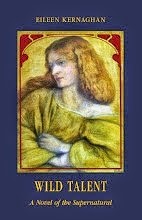
Many years earlier, as the 20 year old Alexandra Néel, she studied oriental languages and philosophies in London and Paris.  This younger free-spirited Alexandra appears in my novel Wild Talent: a Novel of the Supernatural.  For Alexandra’s adventures in those early years, I drew on her journal entries, published posthumously as Le sortilège du mystère. Though Wild Talent was meant to be the story of my fictional hero Jeannie Guthrie, her friend Alexandra seemed determined to take over the narrative.


In Sophie, in Shadow, a quarter of a century on, the middle-aged Alexandra is comfortably ensconced in her Himalayan hermit’s cave, ten thousand feet above Gangtok, and is still making plans to visit Tibet. Meanwhile, I’ve given her a new role as spiritual adviser to my young hero Sophie Pritchard.


Sir Charles Bell


 During their stay in Sikkim Sophie and the Grenville-Smith family  are guests of the British Resident, Sir Charles Bell, Britain’s political officer in Sikkim, and his wife Cashie. Sir Charles was a respected Tibetan scholar, a friend of the 13th Dalai Lama, whom he met in 1910, and influential in Sikkimese and Bhutanese politics, However, as we see in Sophie, in Shadow, his relationship with Alexandra David Neel was an uneasy one.


Prince Sidkeong Tulku Namgyal

Prince Sidkeong, Maharaja and Chogyal of Sikkim for a brief period in 1914, was a close friend of Alexandra David Néel. When he died suddenly under suspicious circumstances at the age of 35, Alexandra was distraught. Prince Sidkeong’s reformist plans were opposed by the rest of the Sikkimese royal family, and there was a suggestion that his stepmother, the Dowager Queen Drolma, might have had a hand in his death.


Sunday, August 10, 2014


The Alchemy of Historical Fiction: my guest post on Warpworld's series "The Truth Inside the Lie".

Friday, July 4, 2014

Turning Pages: Sophie, in Shadow


Tanita Davis reviews Sophie, in Shadow at Finding Wonderland : The Writing YA Weblog.

"This book is heartily recommended to anyone re-reading A Passage to India this summer, and to anyone whose childhood summers included Kipling's Kim, which is worth a re-read this summer as well. This book is for anyone who fears that young adult books are short on literary value and too long on popular culture. In the timeless style of L.M. Montgomery and E.M. Forster, this book is simply a treat. (Readers who have enjoyed other fantasy fiction on India during colonial times will find this much finer fare,and delight in finding that that this book is somewhat of a companion to Wild Talent: a Novel of the Supernatural, which tells the story of Sophie's cousin Jeannie.)

You can read the full review at the Finding Wonderland site.

Monday, June 30, 2014

"Darkly Dislocating" -- Derek Newman-Stille reviews Sophie, in Shadow at Speculating Canada


"Eileen Kernaghan creates a sense of wondrous dislocation for the reader. a darkly beautiful reminder that every place is haunted, every locale filled with ghosts of memory from the past. Sophie, in Shadow reminds readers that we dwell in a place of fantasy, of wonder and excitement and that those dreamy places of magic and mystery are always steeped in the shadows of past horrors and veiled in secrets We are always one step through the veil of time away from tragedy."

You can read the rest of the review at the Speculating Canada site

Friday, June 20, 2014

Sophie, in Shadow reviewed by CM Magazine

   
Kris Rothstein reviews Sophie, in Shadow in the current issue of CM Magazine from the Manitoba Library Association.


    " For the most part Eileen Kernaghan avoids the tendencies of many authors writing about Victorian and Edwardian India. She does not overly exoticize the landscape or its people. She does an excellent job of creating this milieu and seeing it through the eyes of a particular girl from a particular time, rather than a current perspective. Sophie’s friendships with Will, a young World War I soldier, and Darius, a young Oxford-educated Indian scientist, are both very realistic and convey much about relations of the time between men and women and between English and Indians. The tension between the straight-laced officials and Sophie’s more unconventional adoptive family shows the intricacies of the politics of British rule in India. Ultimately, Sophie, In Shadow ends up being a fantastic history lesson without ever really being obvious about it."

Wednesday, June 4, 2014

Other Worlds, Other Times at Lit Cafe 3

Other Worlds, Other Times is an evening of readings showcasing the work of five award-winning local authors reading from works of fantasy, science fiction, and historical fiction.

Readers are Ken Boesem, Carol Cram, Eileen Kernaghan, David Slater, and Lorna Suzuki.

 Date: Tuesday, June 24, from 7-9 pm in the Reading Room at Alexandra Neighbourhood House, 2916 McBride Ave. in Crescent Beach. Suggested donation for admission is $5, but none will be turned away for lack of funds.

In addition to the readings, the evening includes a Q&A session, an open mic and book sales.


For more information, please contact Neil Fernyhough, Coordinator of Community Programs, at 604-618-2357 (ext 236) or at communityprograms@alexhouse.net.

Monday, May 26, 2014

Sophie, in Shadow: where the story begins


1914

“You must expect to be disappointed,” the other passengers told Sophie. Taking refuge in India was sensible now that Europe was at war, but nonetheless it was an experience to be suffered and endured. “The Taj Mahal by moonlight, pale hands beside the Shalimar — romantic balderdash,” pronounced a bronzed and leathery colonel who was on his way back to the Frontier. India, everyone agreed, meant dirt and poverty, smothering heat, bad smells and indigestible food. “Not to mention revolting heathen practices,” added the colonel’s memsahib, declining to elaborate.

Of all this, Sophie was well aware. She had not much patience with romantic novels. She’d prepared for this journey, in her usual methodical way, by reading histories of the Raj and the Moghul Empire, and Himalayan travellers’ tales. Though even those held out the promise of exotic splendours — minarets and gilded palaces, gardens in Kashmir. In any event, whatever horrors awaited her in Calcutta, it would be a huge relief to disembark. Perhaps, out of reach of English newspapers, she would no longer be an object of such fascination.

Just today she had come up on deck to hear a snatch of conversation, hastily broken off.  "To have both her parents drown when she was — how old? Fourteen? And now to be packed off to this godforsakencountry, to live with relatives she’s never met . . . ”

For two years now Sophie had been made to feel like public property — the survivor of a famous disaster, a name miraculously entered on the right side of a list, a curiosity to be interviewed and
photographed and discussed. She yearned to be once again plain Sophie Pritchard, whose life was nobody’s business but her own.

The river was crowded with every sort of craft — paddle steamers, big, solid square-sailed vessels and little fishing boats with upturned bows, barges and launches and bamboo rafts. Along the near bank were factories and warehouses, temples and walled riverside gardens, burning-ghats and
derelict mansions, weed-covered skeletons of boats, and crowds of people standing knee-deep, waist-deep in the murky waterof the bathing ghats, dressed in long robes, or loin-cloths, or nothing at all.

Now they were through the Floating Bridge, and here at last was Calcutta. India, Sophie suspected, was every bit as noisy, and chaotic, and bad-smelling, and bewildering as the colonel had described; but what mattered was that she would soon set foot on solid ground.

The wheel turns, and turns again. That, thought Sophie, is what Hindus believed. Her old life had ended on that disastrous April night in the North Atlantic. Now, for better or worse, as their ship ploughed its way up this swarming,clamorous Indian river, a new one was about to begin.

Friday, May 9, 2014

An early review of Sophie, in Shadow


From a review just posted by Charlotte, at  Charlotte's Library.: "Sophie, in Shadow is historical fantasy that both educates and entertains, that I particularly recommend to fans of Kim!"


Tuesday, April 22, 2014

Book Launch: Sophie, in Shadow

Saturday, May 10, 1:30 p.m. at the New Westminster Arts Council Gallery, Centennial Lodge, New Westminster BC

Friday, April 4, 2014

Sophie, in Shadow: the historical background


Sophie, in Shadow continues a narrative which began in Wild Talent: a Novel of the Supernatural, set in London and Paris a quarter-century earlier.

Though Sophie, like Jeannie, is a fictional character, her story too plays out against real historical events. The details of the 1915 Christmas Day Plot to seize Calcutta and overthrow British rule in India were not revealed until thirty years later, when a former Viceroy of India mentioned them in his memoirs. That particular plan was discovered in time, and a bloodbath averted. However, as Sophie learns, where there is one conspiracy afoot, there are likely to be others.

Sir Charles Bell’s uneasy relationship with Alexandra David Neel, and Alexandra’s persistent attempts to cross the border into Tibet, are well documented in Government of India files and in Alexandra’s own writings. (Eventually Alexandra did fulfill her dream of travelling in Tibet, to Sir Charles’ immense displeasure.)

For background material I am especially indebted to the following titles: Like Hidden Fire: The Plot to Bring Down the British Empire, By Peter Hopkirk (Kodansha America); Women of the Raj, by Margaret MacMillan (Thames and Hudson); Calcutta by Krishna Dutta (Interlink Books); Calcutta by Simon and Rupert Winchester (Lonely Planet Books); Forbidden Journey: The Life of Alexandra David-Neel, by Barbara and Michael Foster (Harper & Row); and Two Under the Indian Sun, Jon and Rumer Godden’s delightful memoir of their East Bengal childhood, 1914- 1919 (Alfred A Knopf)

On a personal note: in 1912 my maternal grandfather, Arthur Pritchard, decided to give up his struggling farm in Worcestershire and emigrate with his wife and five children to Canada. Their plan was to make the crossing on the much-publicized maiden voyage of SS Titanic, but they were too late to book accommodation, and travelled instead on the next available ship out of Southampton. In the years leading up to the centennial of the Titanic disaster, I was reminded of how such random events can decide the very fact of our existence.

Sophie’s story, like all family histories, is a narrative of “What If’s?”

Friday, March 21, 2014

Sophie, in Shadow: my new young adult historical fantasy


In World War One an orphaned English girl is sent to live in India, where kidnapping, enemy spies, and terrorist plots all challenge her extraordinary powers.

It’s 1914. Sixteen year old Sophie Pritchard, orphaned two years earlier by the sinking of the RMS Titanic, is about to begin a new life in the unfamiliar world of British India. For Sophie, still devastated by her parents' death, India proves a dangerously unsettling environment. Are her terrifying experiences in Kali’s temple and the Park Street cemetery hallucinations, or has she somehow been drawn back through the centuries as a witness to dark places in Calcutta’s past?

Sophie has become an unwilling traveler in a timeless zone where past, present and future co-exist. Kidnapping, enemy spies, and terrorist plots all play their part against the background of a world at war and growing unrest in the Indian subcontinent. Soon Sophie’s powers of precognition will be called upon to help thwart a conspiracy that could incite a bloodbath in Calcutta, and deliver India into enemy hands.

"Sophie, in Shadow deftly weaves intrigue, spies, and mystics with more than a dash of the occult into a story that will captivate any reader." Linda DeMeulemeester, author of the award-winning Grim Hill series.

Release date March 30, 2014 from Thistledown Press. Available for order now.

Stories of the Mystic North


 The popularity of the Walt Disney movie Frozen has brought fresh attention to Hans Christian Andersen’s much loved story The Snow Queen. Andersen’s tale of a brave and determined girl who sets out on an epic adventure to rescue her friend from the Snow Queen’s frozen palace has inspired not only this new Disney film, but a very long list of other film, live theatre and fictional adaptations. Versions of Andersen’s wicked queen appear in C.S. Lewis’s Narnia books, in Phillip Pullman’s The Golden Compass, and in countless other retellings. There's a comprehensive list on the SurLaLune Fairy Tales site.

My own reworking of The Snow Queen follows Gerda’s journey quite closely, with the addition of some mythology from the Finnish epic The Kalevala -- but be warned, there’s a twist at the end.


Tuesday, December 17, 2013


"When I write in the cracks and empty spaces of documented history, I try not to change the things that we know to be true". You can read my guest post, "The Alchemy of Historical Fiction" at Kristene Perron's Warpworld website, where  Kristene is running a series of guest posts, "The Truth Inside the Lie",  on using real people, places, or events in science fiction and fantasy.

Meanwhile, on  Laura Langston's blog, Canadian children's and YA authors talk about their best writing-related Christmas gift ever. (My best gift was the typewriter my parents gave me when I was eleven.)

Wednesday, November 27, 2013

My publisher, Thistledown Press, is holding a special holiday sale on selected titles, including my YA historical fantasy, Wild Talent: a Novel of the Supernatural. You can check out the details and order copies at www.thistledownpress.com.


Sunday, November 3, 2013

From now until November 10, 2013 my kindle titles Winter on the Plain of Ghosts: a Novel of Mohenjo-daro and Dragon-Rain and Other Stories are available as a special promotion on amazon.com for 99 cents.


Sunday, October 13, 2013

Now available as an e-book: The Snow Queen


My Aurora-winning YA fantasy The Snow Queen (Thistledown Press, 2000) is now available in  kindle and kobo e-book format.


In this reworking of Hans Christian Andersen's fairy tale, the magical worlds of Saami shamanism and the Kalevala coexist with the polite Victorian society of nineteenth-century Scandinavia. At a time when traditional faith is challenged by modern science, the old pagan gods still haunt the northern forests.

"Gerda is a sheltered daughter of Victorian-era Denmark's middle class; Ritva is the savage daughter of a Lapp shaman and a Swedish bandit chief. Christian and pagan, city girl and wildwood outlaw, their paths should never have crossed. But Lady Aurore, a mysterious noblewoman, bears away Gerda's beloved, Kai, and Gerda steals away from home to rescue him, though she knows she has little hope of success. Even that slim hope is dashed, it seems, when she is captured by the robber-maiden Ritva. Yet they will find themselves traveling together beyond the Cave of the North Wind, to the end of the earth--and the Snow Queen's perilous palace.

In The Snow Queen, Eileen Kernaghan has respectfully combined elements of Hans Christian Andersen's fairy tale with Saami shamanic lore and the Finnish epic, the  Kalevala, to create a powerful, enchanting, and gracefully written novel with intelligent, well-drawn characters and with unexpected plot turns that will surprise you right up to the end". -- Cynthia Ward

Thursday, October 10, 2013

VPL Self-publishing workshops announced


The Vancouver Public Library is hosting two self-publishing workshops this fall. The first one is called Introduction to Self-Publishing : Publishers Panel and will take place on Saturday November 16th from 1 – 4 pm in the Alice MacKay room at the Central Library. For more information here is the link to the online calendar event page:  as well as to their Facebook Event page

The second workshop is called Introduction to Self-Publishing : Author Panel and will take place on Saturday December 7th from 1 – 4 pm again in the Alice MacKay room at our Central Library. For more information here is the link to the online event calendar page: (a Facebook Event page will be coming soon)

Both events will start with a panel presentation on the stage, where each panelist will have five minutes to share their publishing experiences and background with the audience. This will take approximately 45 minutes. To make the event more interactive and to allow for more participation between the audience and the speakers, we have set up the room in small groups of 10-12. This enables the presenters to visit each group and gives each audience member more opportunity to ask their questions and participate in the discussion. Seating is limited and registration is required. To register please call: 604-331-3603.

Monday, September 30, 2013

 Tesseracts 17 editor Colleen Anderson interviews me about my poem "Night Journey: West Coast"

And here's the Tesseracts Seventeen YouTube trailer

Wednesday, June 12, 2013


Friday, May 17, 2013

 
Dragon-Rain and Other Stories, a collection of my published SF and fantasy short stories, is now available from amazon sites as a kindle e-book.  

Black Bon sorcery in a mythical Himalayan kingdom; a mysterious death at a fashionable London dinner-party; a bleak look at near-future medicine; an apocalyptic North America where the only things left to sell are stones. Here are nine tales of dark fantasy, shamanist rituals, the nineteenth century occult, near-future science and dystopic future worlds.

The title story, "Dragon-Rain", appeared in The Year's Best Fantasy & Horror, ninth annual edition.


An excerpt from  "Dragon-Rain"


The sorceress Jatsang stopped at a bend in the trail to scratch a fleabite. Gazing southward, she grunted in dismay. The valley below – once as lush as a length of emerald silk – was now the colour of yak-dung. Where were the barley fields and pastures she remembered, the lapis lazuli pools and winding silver streams?

By the time she reached level ground her mouth was so parched she could scarcely spit. Nearby were the ruins of a well. In a mood of profound pessimism she peered into its depths. Something skittered along the bottom, rasping its wings in a way that set her teeth on edge. There was no sign of water.

"May you be happy."

Jatsang swung round to see who was behind her. An elderly monk was watching her with mournful, red-rimmed eyes. "May you be peaceful," he added. "May you be free from care."

"I'd be a good deal happier," observed Jatsang, "if I had something to drink." She waved a vague arm towards the arid fields. "What has happened here? The place has gone to wrack and ruin."

"Serpents," said the monk.

"Serpents?"

"Serpent-dragons, to be precise. A nest of nagas. At the bottom of our well."

"This well?"

"The very same. First they drank up all the water in the well, then they crawled out into the fields, and emptied the ponds and streams. And as you see, we've had no rain at all this year. You'll find the begging poor, my lady. Since the drought came, we have had no food for our children, let alone anything to spare for pilgrims."

Jatsang reached into her travel-pack and pulled out her five-pointed sorcerer's hat. She put it on her head.

"I beg your pardon," said the monk. He looked confused. "You are a sorcerer, a ngagspa? Of what persuasion?"

"Bon-po," said Jatsang. "Black Bon," she added ominously.

"I saw a Black Bon sorcerer once," said the monk. "He wore a black cloak, a skull on his head, and an apron made of human bones. He was riding on a great black horse." He glanced dubiously at Jatsang's drooping white skirt and grubby waistcoat, the jagged rip in the sleeve of her shirt, the greasy black rope of hair that hung to her heels.

Jatsang asked impatiently, "Do you think we tramp around the mountains in our ceremonial dress?"

"Then Reverend Lady, if you are indeed a sorceress, you are the answer to our prayers."

"How so?"

"This drought has been caused by magic. We need a powerful magician to lift it."

Jatsang drew herself up to her full height. "I don't do magic for hire," she said. "Where's your village shaman?"

“Eaten,” said the monk.

“Eaten?”

Dolefully, the monk explained. "He summoned a powerful demon to drive the nagas out of the well. But he got the last part of the spell wrong, and the demon ate him instead."

"How unfortunate," remarked Jatsang, without much sympathy. She had no patience with fools. "And what has this to do with me?"

"Reverend Lady, will you help us? Out of compassion. Think of the children. Many of them have fallen sick. Some have already perished...."

Jatsang felt herself wavering. In the back of her mind, like lines of elegant black script, rose the words of the Precious Guru: Mahayana, Secret Mantra, means to benefit others. It is essential for all tantric practitioners to cultivate great compassion in their being.

As though sensing her indecision, the monk leaned closer. His breath stank of hunger. "Reverend Lady, at least will you come with me to the monastery? Will you speak to our abbot?"

"Will you give me some water?"

"If need be, our last drop."

Jatsang shrugged, and followed him to a cluster of whitewashed buildings clinging haphazardly to the mountainside. Like all else in this stricken land, the monastery's aspect was ruinous. The monks looked tired and undernourished; the bottoms of their robes and their bare feet were grey with dust. The hum of prayer was dispirited, subdued; even the prayer wheels seemed to spin lethargically.

The abbot came out in person to greet Jatsang. When they had exchanged white scarves and he had settled her in a comfortable chair in his private sanctum, with a large jug of water close to hand, he said," I'm told you are an adept of the Short Path, and a ngagspa of considerable attainment."

"It is not my habit," said Jatsang, "to speak publicly of such matters. Even within these walls, demons may be listening. Let me say this, merely: that as mistress of tumo, I've crouched naked on a mountain peak in the middle of a blizzard, warming my flesh with my own internal fires. As a lung-gom-pa, I have crossed three valleys and three mountains in a single day. Moreover, I have created fire-demons – no less than thirty at a time – not to mention tulpa knights and various other phantoms of the mind....

"And how," interrupted the abbot, "does one so skilled in the mystic arts, set about expelling demons?"

"One performs chod," replied Jatsang. She spoke without enthusiasm. She had performed chod only last month, because she felt the need to keep in practice. It had not been a happy experience. "Again, it would be a mistake to divulge too much. Suffice to say, when one celebrates chod, one tends to stir up any malign forces that may be present in the vicinity."

"And once you have drawn these demons out of their hiding place?"

"Then I will challenge them to destroy me, and by surviving, I will show them to be illusion. If you cease to believe in the power of demons, they will cease to harm you."

A flicker of disappointment – perhaps even of dismay – marred the perfect serenity of the abbot's face. "Is it not within your powers to destroy them on the spot?"

"You forget," said Jatsang, "that the very essence of chod is love and compassion for all things. Even demons. A Bon sorceress does not destroy malign spirits. Rather, she persuades herself of their non-existence."

"I understand," said the abbot, looking unconvinced. "Before you begin chod, is there anything you require?"

"Several things. A sacred thunderbolt. A bell. A damaru drum. A thighbone trumpet. A moonless night. And silence."

"In two nights the moon is new. The rest is easily supplied."

"Very well, " said Jatsang. "Then I will spend the intervening hours in meditation. To celebrate chod is to court madness and death. One does not embark upon it unprepared."

First she gave some thought to the location. Ideally, chod should be performed in a place where corpses had been chopped to bits and fed to the wolves and vultures. But the important thing was that the site should be wild, and haunted by malignant spirits. The patch of ground beside the naga-infested well, she decided, would adequately serve her purpose.

All that night she prepared herself, praying to the old Bon gods: to Father Khen-pa, Master of the Heavens, riding on the White Dog of the Sky; and to Khon-ma, Mother of the Nine Earths, astride her ram. On the next night, an hour after midnight, under a dark thunderous sky, Jatsang pitched her ritual tent. It was ornamented, in the prescribed manner, with the words "Aum", "A" and "Hum"; and flags in the Five Mystic Colours fluttered from its roof. It was time to begin the ceremony:

Tuesday, March 5, 2013

Women in Horror interview


In celebration of February's Women in Horror Month, Colleen Anderson interviews me at  http://colleenanderson.wordpress.com/2013/02/27/women-in-horror-eileen-kernaghan/

Sunday, January 20, 2013

Winter on the Plain of Ghosts on kindle


My 2004 historical fantasy  Winter on the Plain of Ghosts: a Novel of Mohenjo-daro is now available from all Amazon sites as a kindle e-book.

Winter on the Plain of Ghosts is a story of sorcery, religious conflict, political intrigue and ecological disaster in the lost cities of the Indus Valley.

They are called the Chosen Ones -- children dedicated to the goddess Yamash and raised in pampered luxury. But such privilege comes with a terrible price. When Rujik and Bima learn of the gruesome death that awaits them as sacrifices to the Goddess, they escape across the desert to Meluhha, and the fabled city of Mohenjo-daro. Bima finds fame as a dancer; Rujik survives by turns as thief and alchemist's assistant, magician and merchant-captain. In revolt against the cruel, repressive priesthood that governs Meluhha, Rujik joins forces with the barbarian woman Utarah to lead a rag-tag army of warriors, thieves and street-sorcerers. What they unleash is a series of bloody rebellions in which much of the city is destroyed. The Wheel has come full circle. In a final desperate act of magic Rujik must invoke the totemic animals of Meluhha to save both himself and his beloved Bima from the grisly vengeance of the priests.


(From my Author's Note)

The fall of the Indus valley civilization is one of the great unanswered questions of archaeology. Were the cities of Mohenjo-daro and Harappa destroyed by climactic change? A shift in the course of the Indus River? Invasion? Few writers of fiction have explored the subject. Years ago in a used bookstore I stumbled across a small monograph which endeavoured to decode the Indus Valley seal inscriptions. I bought the pamphlet, and embarked on some intensive research. Here was a world lost in antiquity, and an unsolved mystery. I had the subject for a novel.

Alternate histories ask "What if?" Those of us whose fantasies play out in real historic time like to explore the "how" and "why" -- always keeping in mind that if you travel far enough back in antiquity, you may find sorcerers, baleful spirits, magical kingdoms, and spells that actually work.

Friday, January 11, 2013

English writer and blogger Rebeccah Giltrow interviews at me http://rebeccahgiltrow.blogspot.co.uk/2013/01/writer-eileen-kernaghan.html

Sunday, October 21, 2012

Revisiting The Snow Queen

(From an e-mail interview by Vancouver writer Casey Wolf)  You can read the complete interview here.

cw: Eileen, could you give a sketch of the intent behind The Snow Queen? Who do you hope to reach, and what would you like them to get from the novel?

ek: Well, naturally one intent is entertainment--I'd like to think I've written a page-turner. But as well, I wanted to celebrate a classic of fantasy literature with uniquely independent female characters. In this post-feminist age we still need adventure stories for girls. The Victorian period, remarkably enough, was the heyday of the woman traveller -- all those intrepid ladies with the courage and stamina -- and the financial means -- to set off on journeys of exploration to the most dangerous corners of the world. It's fun to speculate on what might happen to the characters after a story ends -- and I decided that what the future should hold for Gerda was not marriage to Kai, but a life of travel and adventure. So I made some changes to Andersen's conventional mid- Victorian ending. Reworking the story also gave me the chance to expand the role of the Little Robber Maiden, who has always been my favourite fairy tale character. As to who I hope to reach, my answer is to readers of all ages.

Wednesday, September 12, 2012


Friday, July 13, 2012

From the BBC News Magazine:

Mohenjo Daro: Could this ancient city be lost forever?

 "Pakistani officials say they are doing their best to save one of the most important archaeological sites in south Asia, Mohenjo Daro. But some experts fear the Bronze Age site could be lost unless radical steps are taken." http://www.bbc.co.uk/news/magazine-18491900


Available from Amazon.com: Winter on the Plain of  Ghosts: a novel of Mohenjo-daro


Tuesday, June 19, 2012

A tale of three covers


Three covers for the same book -- three very different interpretations of the central character,  Naeri the earth witch.


This is the cover of the original 1989 edition of The Sarsen Witch.


cover by Jill Karla Schwartz


Below is the Timothy Lantz cover for the 2008 Juno Books edition --  a striking and I feel an accurate depiction of a character who is "spare and strong and hardy as the gorse".                                           


This highly romantic interpretation -- with, unfortunately,  the title misspelled -- is an earlier attempt at a cover for the Juno edition. Though this version was never used, it does show up on some online sites.


 You can find reviews of The Sarsen Witch and an excerpt from the book on the Juno website. 


Sunday, May 13, 2012

Les chimères

Gustave Moreau, Les Chimères


On one wall, half in shadow, was a large untinted photographic reproduction .... In the background I could see the pinnacles and archways of a gothic palace or cathedral; mysterious towers half-hidden in vegetation; and on the far horizon, rocky crags. In the foreground, fantastic images were layered one upon another, bewildering to the eye: naked goddesses mounted on bulls and hippogryphs, a queen in the crown of Charlemagne stroking a unicorn’s head, a serpent-headed goat; as well as fairies, angels, witches, and all manner of fabulous birds and beasts.

“I see you are admiring M’sieu Gustave Moreau’s famous picture,” said M. d’Artois. “Les Chimères –a masterpiece of artifice and invention, He never finished it, you know. To portray all of myth, all of history, all of religion – what artist is equal to such a task?”

And I, who know so little of art, could only murmur, “It’s beautiful, and very strange – and I think quite frightening.”

“Just so. A journey through the haunted forests of the imagination. The reflection of our dreams, our terrors and our innermost desires.”

Even in black and white, the picture had the power to mesmerize. If one looked too long, one had to tear one’s gaze away. I could well imagine that beyond the distant mountains of that never-to-be- finished painting lay a still more marvellous and seductive country existing only in the artist’s mind.

I was raised to believe that in this life, at least, there is only one reality, and that is the world of ordinary experience, that has no place for unicorns and hippogryphs. But all that has happened these past months has tested that belief. If we believe in Heaven, is it so impossible to believe, as spiritualists do, that other worlds exist above and beyond our own?

Friday, May 4, 2012

In HPB's study: an excerpt from Wild Talent


I asked – as many others have asked before me -- “Madame Blavatsky, is that real magic you do, or jiggery-pokery?”

HPB does not easily take offense, and this made her laugh. “Mostly the second. But never question, Miss Guthrie, that I can do the first. Shall I show you?”

When I hesitated, she turned those brilliant azure eyes upon me, and said, “Listen then, and learn. This is magic. This is the music of life. And have no doubt that it is real.”

And from somewhere there came a ghostly music, faint and distant at first, so that I strained to hear; then growing louder till it filled that snug, close, lamplit room. It was high and sweet as the sound of a flute, but unlike any instrument I could name. With that intense and piercing sweetness came a scent of herbs – wild thyme, or rosemary – so that I thought of the Pipes of Pan, of their dangerous music, beckoning and enticing.

And now I could hear voices singing – a melody without words that made my heart catch in my throat. The voices, languorous and seductive, twined themselves around me. I could not move, could scarcely draw my breath. More than anything in the world I wanted to yield to that music, let it wash over me and transport me. My gaze drifted to the photo of the Tibetan Master. His eyes, dark and wise and beautiful, seemed to say, “Leave this world behind. I will lead you over the high lonely passes.” And I was filled with a terrible foreboding. I remembered Alexandra’s story of the painting, with its haunted landscape, and her words -- : “Be careful. You could be pulled in.”

But pulled into what? I knew only that I must step back from a nameless peril.

Sunday, April 29, 2012

History and Women review of Wild Talent


"Although this novel is listed as a young adult novel, it transcends this limitation easily into adult or women's fiction. It is richly written with a high regard for historical detail, making this novel a true and accurate journey into the richness of the Victorian world." 

You can read the full review on the Wild Talent page  at amazon.com