Thursday, March 12, 2015
Darkness. The air frigid, the sea an infinite expanse of black glass. The sky glittering with stars. Somewhere music — a lively dance tune, ragtime — growing faint with distance as their lifeboat drifted away from the dying ship. The dark, the bitter cold, the sickening awareness of unthinkable loss. The ship’s stern a monstrous finger pointing skyward, its ghostly lights still glimmering beneath the water. The music slow and sombre now, a familiar hymn. And then that terrible rising din of voices.
Sophie woke, shuddering and crying out. She sat up among the tumbled bedclothes, teeth chattering, throat clenched around a hard knot of terror and grief. The dream never changed. How many times was she doomed to relive in every detail the horror of that night? (Sophie, in Shadow, Thistledown Press, 2014.)
Sophie, in Shadow is shortlisted for a B.C. Book Prizes Sheila A. Egoff award in children's literature.
Wednesday, January 28, 2015
In Kali's temple
This was not the painted image of the goddess that Sophie had seen everywhere throughout the city, nor did it resemble the clay figures sold in the marketplace. This Kali of black stone, with her long, grotesquely protruding golden tongue and her three huge glaring red eyes, must be, thought Sophie, the goddess at her darkest and most fearsome, the One Who Causes Madness. This was not an image of the deity in terrifying human form, but an image of terror itself, come down from the first days of the world.
(From Sophie, in Shadow, Thistledown Press, 2014.)
Thursday, November 6, 2014
Sophie, in Shadow reviewed by the Historical Novel Society.
The review, by Arleigh Johnson, appeared in Historical Novels Review Issue 70 (November 2014) You can read the full review at the Historical Novel Society website.
Wednesday, November 5, 2014

My latest novel, Sophie, in Shadow, set in 1914 India, required a daunting amount of research. Since a great deal has been written about India under the Raj, a broad picture of life in British India was not difficult to find. But what I also discovered -- in the memoirs of private citizens, and in histories like Margaret MacMillan’s Women of the Raj -- were fascinating, less often recorded details of everyday life.
When the ladies of the Raj escaped from the sweltering plains to their rented houses in the hill stations, they transported not only clothing and supplies, but a good deal of household furniture. A list of basic necessities in The Complete Indian Housekeeper and Cook (1888) includes crockery and kitchen utensils, carpets, a chest of drawers, bed linen, iron cots, three boxes of books, ornaments ,coats for the servants, an iron bath, and a great deal else -- eleven camel loads in all. (Cited by Margaret MacMillan in Women of the Raj)
Simple Menus and Recipes for Camp, Home and Nursery by Lucy Carne
(1902) suggests a suitable breakfast in camp, while touring: kidney stew, pigeon potato pie and a curry. The Complete Indian Housekeeper and Cook provides a list of garments in which a lady might survive the heat: undergarments of silk or flannel, corsets buttoned to a petticoat and covered by a silk camisole, and then a light woolen tea gown. Optionally, a memsahib might add a flannel cummerbund and a cork spine-protector.
"The Fishing Fleet was by long-established custom made up of the highly eligible, beautiful daughters of wealthy people living in India. This was the only way in which they could come out under the protection of their parents, to meet eligible young men and marry. Those who failed returned to England in the spring and were known as the "Returned Empties. " (Plain Tales from the Raj , Charles Allen, Ed.)
Amy Mathers reviews The Snow Queen at Marathon of Books. "In an interesting take on Hans Christian Andersen’s The Snow Queen,
Eileen Kernaghan uses her version to focus on the different kinds of
strength and power, belief and disbelief in the magic and mystical and
the importance of self-determination. Her story focuses on Kai’s
disappearance, but also on his rescue thanks to the ingenuity of Gerda
and Ritva."
Monday, October 27, 2014

Read Pulp Literature's interview with my character Ritva, from "The Robber Maiden's Story" . My story of Ritva's adventures, loosely based on Andersen's "The Snow Queen" will appear in the Winter 2015 issue of PL.
Wednesday, October 8, 2014
Reading History at Renaissance Books
Ruth Kozak and I will be reading from our new historical novels at Renaissance Books, 43 -6th Street in New Westminster, on Wednesday, October 15 at 7 p.m. Admission is free and an open mic will follow.
Beginning in Babylon at the time of Alexander the Great’s death in 323 BC, Ruth Kozak’s The Shadow of the Lion follows the journey of the newly appointed joint-kings, Alexander’s half-brother Philip Arridaios and his infant son, Iskander, through Asia Minor and Egypt to Macedon, until the year 310 BC when tragedy marks the end of Alexander’s dynasty.
Set in British India, 1914, Sophie, in Shadow, by Eileen Kernaghan, is a story of spies and terrorist plots, time travel and Himalayan journeys, against the background of a world at war. For Sophie Pritchard, still devastated by the loss of her parents in the Titanic disaster, India proves a dangerously unsettling environment, where past, present and future seem to co-exist.
Saturday, August 30, 2014
The real historical figures in Sophie, in Shadow

Alexandra David Néel
In the course of her long and adventurous life, Alexandra David-Néel (24 October 1868 – 8 September 1969) was an opera singer, scholar , spiritualist, Buddhist, anarchist, author of more than thirty books on Eastern religion, and intrepid explorer of the Himalayas. In 1924, at the age of 55, after many unsuccessful attempts to enter Tibet -- long forbidden to foreigners -- she disguised herself as a male pilgrim and, accompanied by her adopted son, Sikkimese monk Aphur Yongden, she became the first European woman to reach Lhasa. Out that journey came her best known book, My Journey to Lhasa (1927). Alexandra’s writings and her adventures inspired not only Jack Kerouac Allen Ginsberg, and philosopher Alan Watts, but generations of Himalayan travellers

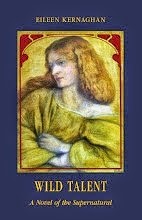
Many years earlier, as the 20 year old Alexandra Néel, she studied oriental languages and philosophies in London and Paris. This younger free-spirited Alexandra appears in my novel Wild Talent: a Novel of the Supernatural. For Alexandra’s adventures in those early years, I drew on her journal entries, published posthumously as Le sortilège du mystère. Though Wild Talent was meant to be the story of my fictional hero Jeannie Guthrie, her friend Alexandra seemed determined to take over the narrative.

In Sophie, in Shadow, a quarter of a century on, the middle-aged Alexandra is comfortably ensconced in her Himalayan hermit’s cave, ten thousand feet above Gangtok, and is still making plans to visit Tibet. Meanwhile, I’ve given her a new role as spiritual adviser to my young hero Sophie Pritchard.
Sir Charles Bell
During their stay in Sikkim Sophie and the Grenville-Smith family are guests of the British Resident, Sir Charles Bell, Britain’s political officer in Sikkim, and his wife Cashie. Sir Charles was a respected Tibetan scholar, a friend of the 13th Dalai Lama, whom he met in 1910, and influential in Sikkimese and Bhutanese politics, However, as we see in Sophie, in Shadow, his relationship with Alexandra David Neel was an uneasy one. Prince Sidkeong Tulku Namgyal
Prince Sidkeong, Maharaja and Chogyal of Sikkim for a brief period in
1914, was a close friend of Alexandra David Néel. When he died suddenly under suspicious circumstances at the age of 35, Alexandra was distraught. Prince Sidkeong’s reformist plans were opposed by the rest of the Sikkimese royal family, and there was a suggestion that his stepmother, the Dowager Queen Drolma, might have had a hand in his death. Friday, July 4, 2014
Turning Pages: Sophie, in Shadow
Tanita Davis reviews Sophie, in Shadow at Finding Wonderland : The Writing YA Weblog.
"This book is heartily recommended to anyone re-reading A Passage to India this summer, and to anyone whose childhood summers included Kipling's Kim, which is worth a re-read this summer as well. This book is for anyone who fears that young adult books are short on literary value and too long on popular culture. In the timeless style of L.M. Montgomery and E.M. Forster, this book is simply a treat. (Readers who have enjoyed other fantasy fiction on India during colonial times will find this much finer fare,and delight in finding that that this book is somewhat of a companion to Wild Talent: a Novel of the Supernatural, which tells the story of Sophie's cousin Jeannie.)
You can read the full review at the Finding Wonderland site.
Monday, June 30, 2014
"Darkly Dislocating" -- Derek Newman-Stille reviews Sophie, in Shadow at Speculating Canada
"Eileen Kernaghan creates a sense of wondrous dislocation for the reader. a darkly beautiful reminder that every place is haunted, every locale filled with ghosts of memory from the past. Sophie, in Shadow reminds readers that we dwell in a place of fantasy, of wonder and excitement and that those dreamy places of magic and mystery are always steeped in the shadows of past horrors and veiled in secrets We are always one step through the veil of time away from tragedy."
You can read the rest of the review at the Speculating Canada site
Friday, June 20, 2014
Sophie, in Shadow reviewed by CM Magazine
Kris Rothstein reviews Sophie, in Shadow in the current issue of CM Magazine from the Manitoba Library Association.
" For
the most part Eileen Kernaghan avoids the tendencies of many authors writing
about Victorian and Edwardian India. She does not overly exoticize the
landscape or its people. She does an excellent job of creating this milieu and
seeing it through the eyes of a particular girl from a particular time, rather
than a current perspective. Sophie’s friendships with Will, a young World War I
soldier, and Darius, a young Oxford-educated Indian scientist, are both very
realistic and convey much about relations of the time between men and women and
between English and Indians. The tension between the straight-laced officials
and Sophie’s more unconventional adoptive family shows the intricacies of the
politics of British rule in India. Ultimately, Sophie, In Shadow ends up
being a fantastic history lesson without ever really being obvious about it."
Wednesday, June 4, 2014
Other Worlds, Other Times at Lit Cafe 3
Other Worlds, Other Times is an evening of readings showcasing the work of five award-winning local authors reading from works of fantasy, science fiction, and historical fiction.Readers are Ken Boesem, Carol Cram, Eileen Kernaghan, David Slater, and Lorna Suzuki.
Date: Tuesday, June 24, from 7-9 pm in the Reading Room at Alexandra Neighbourhood House, 2916 McBride Ave. in Crescent Beach. Suggested donation for admission is $5, but none will be turned away for lack of funds.
In addition to the readings, the evening includes a Q&A session, an open mic and book sales.
For more information, please contact Neil Fernyhough, Coordinator of Community Programs, at 604-618-2357 (ext 236) or at communityprograms@alexhouse.net.
Monday, May 26, 2014
Sophie, in Shadow: where the story begins
1914“You must expect to be disappointed,” the other passengers told Sophie. Taking refuge in India was sensible now that Europe was at war, but nonetheless it was an experience to be suffered and endured. “The Taj Mahal by moonlight, pale hands beside the Shalimar — romantic balderdash,” pronounced a bronzed and leathery colonel who was on his way back to the Frontier. India, everyone agreed, meant dirt and poverty, smothering heat, bad smells and indigestible food. “Not to mention revolting heathen practices,” added the colonel’s memsahib, declining to elaborate.
Of all this, Sophie was well aware. She had not much patience with romantic novels. She’d prepared for this journey, in her usual methodical way, by reading histories of the Raj and the Moghul Empire, and Himalayan travellers’ tales. Though even those held out the promise of exotic splendours — minarets and gilded palaces, gardens in Kashmir. In any event, whatever horrors awaited her in Calcutta, it would be a huge relief to disembark. Perhaps, out of reach of English newspapers, she would no longer be an object of such fascination.
Just today she had come up on deck to hear a snatch of conversation, hastily broken off. "To have both her parents drown when she was — how old? Fourteen? And now to be packed off to this godforsakencountry, to live with relatives she’s never met . . . ”
For two years now Sophie had been made to feel like public property — the survivor of a famous disaster, a name miraculously entered on the right side of a list, a curiosity to be interviewed and
photographed and discussed. She yearned to be once again plain Sophie Pritchard, whose life was nobody’s business but her own.
The river was crowded with every sort of craft — paddle steamers, big, solid square-sailed vessels and little fishing boats with upturned bows, barges and launches and bamboo rafts. Along the near bank were factories and warehouses, temples and walled riverside gardens, burning-ghats and
derelict mansions, weed-covered skeletons of boats, and crowds of people standing knee-deep, waist-deep in the murky waterof the bathing ghats, dressed in long robes, or loin-cloths, or nothing at all.
Now they were through the Floating Bridge, and here at last was Calcutta. India, Sophie suspected, was every bit as noisy, and chaotic, and bad-smelling, and bewildering as the colonel had described; but what mattered was that she would soon set foot on solid ground.
The wheel turns, and turns again. That, thought Sophie, is what Hindus believed. Her old life had ended on that disastrous April night in the North Atlantic. Now, for better or worse, as their ship ploughed its way up this swarming,clamorous Indian river, a new one was about to begin.
Subscribe to:
Posts (Atom)